Recorded 4 October 2026 · 24 min
Rob Haddock, a general partner at crypto venture firm Dragonfly, argues that standalone personal AI agents are a weak place to look for value. In his view they lack lock-in and will face dozens of competitors. The real beneficiaries will be institutions that control accounts, distribution and payment rails.
The conversation turns on a tension. Agents may remove friction and move money easily, but friction protected many business models, from long-tail subscriptions to reservation platforms to alpha for retail investors. Haddock separates what he sees as real disruption, such as subscription cancellation, from what he doubts, such as agent-triggered bank runs. His claims are mostly expectations rather than evidence.
No lock-in, no moat — ▶ 0:48
Haddock is bearish on the leading personal agent, called Instinct in the transcript, because its early users are Silicon Valley power users who switch models at the drop of a hat. He calls the reported $1 billion in volume small relative to the ability to make money. When a rival, Muse, launched with better compute access, it coordinated tasks faster. He expects users to migrate to whichever agent works best, and expects roughly 50 competitors. Being first generated excitement but did not anticipate a competitive market.
Value sits inside financial platforms — ▶ 1:59
Haddock says general-purpose agents are built on Plaid, which brings ACH failure rates of around 2% and settlement delays of T+1 to T+3, with capital inefficiency. He therefore expects agents embedded in banks and financial apps to capture more value. Large companies such as Meta can monetize the end consumer elsewhere, while a standalone agent must raise money for compute that accrues no value to it. Agents may still solve coordination problems among friends, family and colleagues, but he doubts that pays, noting that the median American takes zero flights a year.
Why bank runs look implausible — ▶ 8:41
Apollo's chief economist warned that mass agent adoption could trigger a bank run if every agent moves cash to high-yield accounts. Haddock doubts it. Agents built on Plaid are unlikely to move money en masse, even with real-time payment rails. He expects automation to happen inside agent-first institutions that control checking, savings and investment accounts together. He notes that LLMs currently recommend Mercury as agent-friendly rather than JP Morgan, and he doubts that customers who direct-deposit at JP Morgan will start sweeping funds to SoFi.
Subscription churn is real — ▶ 10:26
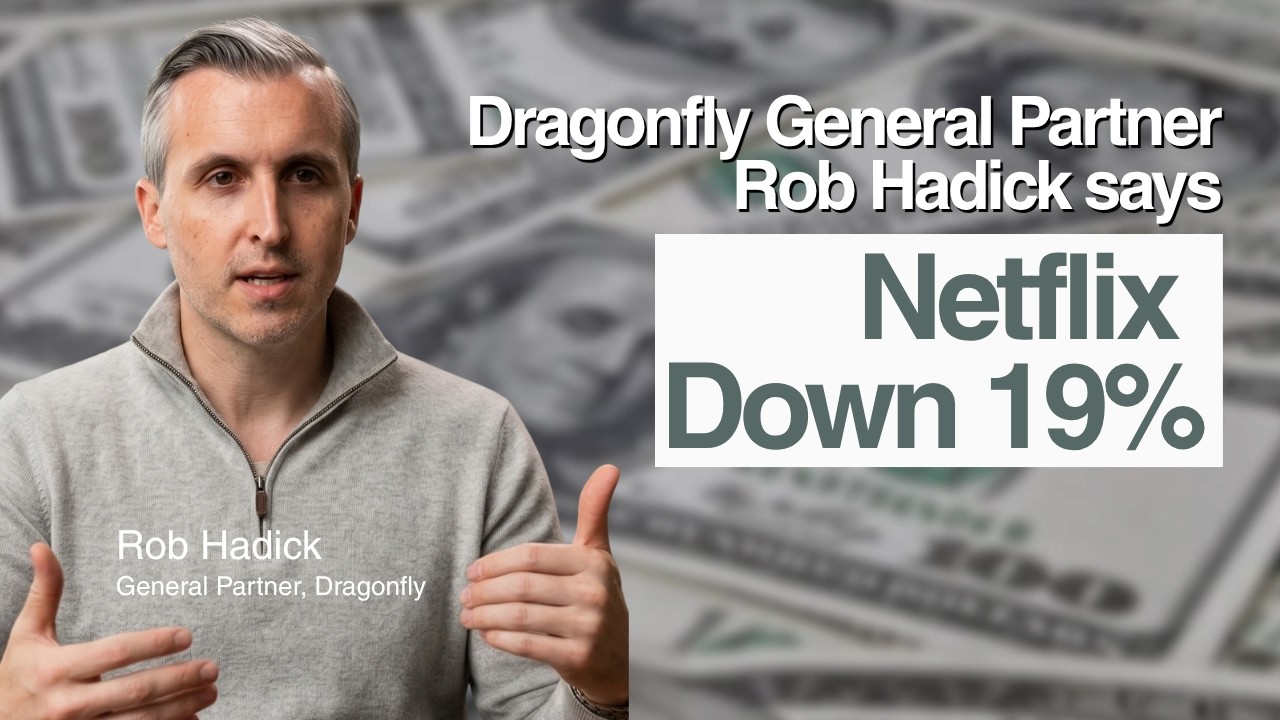
Agents that scan card statements and propose cancelling unused subscriptions could hit startups' recurring revenue, a threat both speakers consider real. Haddock says businesses that depend on a long tail of customers who never cancel are exposed, citing Netflix, down 19% last month by the host's figure, along with Planet Fitness and wireless carriers. The transcript offers no evidence that agents caused those declines. His broader claim is that surplus is shifting from banks to fintechs and distribution-rich players rather than disappearing.
Curation limits agent-proofing reservations — ▶ 12:26
Resy has begun cutting off users whose agents spam its system, and Haddock expects OpenTable to follow. He explains why restaurants do not simply auction tables to the highest bidder: they want to curate ambiance, including taste-makers who will not pay most, and they value regulars. Dorsia shows the limit. It launched a $5,000 subscription tier, then a $25,000 tier a year later, offering access to prime tables, not guaranteed ones. Restaurants want a fraction of seating sold this way, never all of it.
Agents herd investors together — ▶ 15:26
If everyone asks LLMs what to buy, answers converge, Haddock argues, even with personalization for age and risk tolerance. He expects advice to push more money into ETFs and direct indexing, and into consensus winners such as Nvidia, Microsoft, Amazon and Meta. He recalls that about 51% of Nasdaq stocks are in loss this year, though he is unsure of the exact figure. The host counters that agent swarms could diversify strategies. Haddock replies that institutional flows are already quantitative, so quant firms squeeze alpha from everyone else.
Information asymmetry is eroding — ▶ 21:04
Haddock links agent investing to the loss of data advantages. Warren Buffett's early returns relied on information asymmetry, and venture capital still runs on it. Hedge funds have spent tens of millions of dollars a year on alternative data, such as credit card data that previewed Nike's quarterly sales or drone images of construction sites. As agents make ingesting data and extracting insights easier, he argues, the access shield protecting such data comes down. Niche data remains valuable to frontier labs and alpha-seekers, but more people can reach it.
Rob Haddock's central claim is that the personal AI agent is the wrong layer at which to expect value capture. In his view, the leading consumer agent, called Instinct in the transcript, has no lock-in. Its core users are Silicon Valley power users who switch models at the drop of a hat. A reported $1 billion in volume, he argues, is small relative to the ability to make money. When Muse launched with better access to compute, it coordinated tasks faster. His expectation is that people will drift toward whichever agent works best and that roughly 50 competitors will emerge. Being first, he says, generated excitement but did not account for how competitive the market would become.
The monetization problem compounds the moat problem. Haddock expects larger companies, with Meta as his example, to monetize something other than the agent itself. A standalone agent, by contrast, must raise money for compute that accrues no value to it. He grants the steelman for investors: an addressable market that is nearly everyone, a few basis points on transactions, data monetization, perhaps ads. But the use cases that dominate the pitch are thin. The median American takes zero flights a year, so travel booking is not a mass-market pain point. Coordination among friends, family and colleagues is more plausible, but he does not show that it pays.
Haddock locates value where agents sit on top of accounts and rails. General-purpose agents are built on Plaid, he says, and inherit ACH failure rates of around 2% and settlement times of T+1 to T+3, which is capital-inefficient. An agent inside a bank or financial app does not face those constraints. This also explains his doubt about the Apollo economist's warning of agent-driven bank runs. Moving money at scale, he argues, requires an institution that controls checking, savings and investment accounts. His example is Mercury, which LLMs already recommend as agent-friendly. Customers who direct-deposit at JP Morgan are unlikely to start sweeping money elsewhere.
What he considers real is a shift in surplus. Agents that audit card statements and cancel unused subscriptions could damage businesses whose revenue depends on customers who never cancel. Haddock points to Netflix, down 19% last month by the host's figure, Planet Fitness and wireless carriers. The transcript offers no evidence that agents caused those declines, so the link should be read as his interpretation. His underlying argument is that money does not vanish when friction falls. Surplus moves from banks toward fintechs and companies with consumer-friendly distribution. That is a claim about where value migrates, not about whether agents work.
Intermediaries have defenses, but his examples suggest the defenses are partial. Resy has started cutting off users whose agents spam the platform, and Haddock expects OpenTable to do the same. Auctioning tables is not a clean fix, because restaurants want to curate their crowd and value regulars over the highest bidder. Dorsia shows the compromise: a $5,000 subscription tier at launch, then $25,000 a year later, buying access to prime times at some tables without a guarantee. Restaurants want a fraction of their seating sold this way, never all of it. Platforms will probably meter agents rather than ban them.
In markets, he argues, agents will converge rather than diversify. Retail users asking LLMs for advice will receive similar answers, even after personalization for age and risk tolerance. That should push more money into ETFs, direct indexing and consensus winners such as Nvidia, Microsoft, Amazon and Meta. He cites, with an admitted memory gap, that about 51% of Nasdaq stocks are in loss this year. The host counters that agent swarms with large resources could diversify strategies, much as Warren Buffett found mispriced companies by reading manuals. Haddock replies that institutional flow is already quantitative, and that agents erode the information asymmetry Buffett exploited, including the alternative-data advantage hedge funds pay tens of millions of dollars a year for.
The evidence behind these claims is uneven. Much of the argument rests on expectation, such as the 50 competitors, the shift of surplus to fintechs and the dominance of agent-first banks. Haddock himself says that for the $10 billion valuation, 'you have to ask them.' If information becomes cheap for everyone, as he argues, the question is what remains scarce. His implicit answer is account control and distribution, which favors incumbents that are not yet agent-first.
The open question. If agents erode the information asymmetries that alpha, alternative-data budgets and venture investing depend on, what becomes the scarce asset? Haddock's answer is distribution and account control, but he offers no evidence that incumbent banks will build agent-first products, or that the surplus shift he predicts will outlast the competition among agents.
Watch the full video at https://www.youtube.com/watch?v=mtYnhKYHwXU.
Comments ()