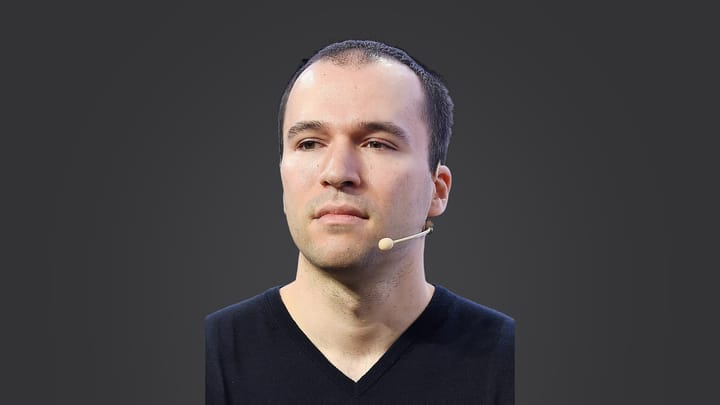

Recorded 15 Oct 2026 · 39 min
Greg Brockman thinks security spend should vastly outstrip software spend. As software becomes nearly free to produce, the scarce thing is software you can trust, so resilience becomes the product. He admits he may not be right, but he holds the view.
Brockman is talking with the No Priors hosts in the week GPT6 rolled out to over a billion people and OpenAI published a batch of math results. The conversation runs from AI producing genuinely new knowledge, to why biology is harder, to Dots, a proactive always-on agent, to the window now open for cyber defenders.
The tension is speed against absorption. Capability is arriving faster than regulators, security teams and mathematicians can take it in. Brockman keeps returning to one answer: keep humans in the driver's seat while the physics underneath changes.
Math makes new knowledge — ▶ 2:03
Nearly 400 important open problems, some a hundred years old, have been resolved. Brockman says it is now "impossible to deny" that AI can produce new knowledge, though not yet whole new theories. The worry is incomprehensible proofs, like the four-color theorem, where a machine just checked cases. But domain experts reviewing the results report surprising applications of ideas, which suggests machine discovery is entering a different phase. The point is leverage: a human equipped with these tools can now do what was unthinkable, in math or in a small business.
Debate keeps humans in control — ▶ 7:23
Techniques discussed since 2017, debate and iterative amplification, address problems too hard for humans to check. Take a book summary: you cannot judge it without reading the book. But if a second AI argues the summary is bad and points to a paragraph with a key plot point it omits, you can judge that argument without reading everything. Training AIs this way keeps human oversight real and also makes results teach the human something, rather than delivering abstract knowledge. Brockman ties comprehension directly to alignment.
Data is the real driver — ▶ 9:14
Checkability is not the core reason math fell. Natural-language proofs are hard to check. The core insight is data: compute plus data plus algorithms equals capability. Math and theoretical physics offer lots of data. Biology is data-bottlenecked, and whether the data can be obtained is "not yet resolved". Techniques for working with less data help. Some bottlenecks are not biological theory at all: a regulatory filing for a clinical trial takes about a year to write, and AI can speed that. Where data does not exist, wet labs and simulation matter.
Biology should be crackable — ▶ 13:16
Drug discovery is the one area OpenAI would pick to fully revolutionise. Brockman's first-principles case: humans are incredibly bad at biology, which is foreign to us, whereas natural language suits us. A neural net has no reason to be better at language than biology, so success in one implies the other. Parallelism can be raised and steps shortened. Some cures may already sit in a single paper in the literature, and finding that paper can cure someone today. Materials science is another near-term domain.
Prove it, then change rules — ▶ 15:49
Regulators will move only on proof. Brockman's analogy is self-driving cars: if they become 10x or 100x safer than humans, rethink the transportation system, perhaps restricting human driving to certain areas. Clinical trial rules differ between Australia and the US, and trials are already moving. He says neural nets are not yet better than running a trial, and long-term outcomes need at least one long time tick of validation. Still, he expects "80% of what is possible" to arrive very quickly.
Dots changes form factor — ▶ 18:40
Dots is a proactive agent that is always on and keeps working when you stop. Brockman's version scans for messages he owes and promises he made, and he wakes to a to-do list. It flags calendar conflicts he never asked about, using his inbox, Slack and recent questions. He calls it "a change to the form factor, not the capability": an Astra-level model with its own cloud computer, in a workplace setting. He runs one, with an owl icon, across his whole work life.
Consumer and enterprise converge — ▶ 20:29
The main difference is cost. Consumer products must scale for free, and bringing memory to all free users was a huge engineering effort. In the workplace, peak intelligence wins as long as extra spend yields returns, so different compute budgets produce different products. Enterprise adds admins, security teams and feature-release controls. Brockman says OpenAI has over a billion consumers plus a leading coding and enterprise business, which no one else has in house, so the strategy is to unify them. He expects a renaissance of entrepreneurs who quit jobs because they trust an AI.
The best UI is none — ▶ 23:36
"The best UI is no UI": talk to the AI by voice, Slack, iMessage or phone. Where a visual interface helps, the AI now generates one on the fly. Flight booking needs a rich option view. Assembling a bicycle might need a bespoke app that once took a person a month to write, which nobody would commission but an AI can build in the moment. GPT6 also gives a quick answer, then keeps thinking toward a fuller one. Enterprise admin toggles raise an unresolved problem: how to surface missing functionality when there is no interface.
The defenders window — ▶ 27:18
Frontier cyber capability can help defenders now, but broadly diffused capability ratchets up with every release; model-driven hacks of South Korean banks are early signs. Brockman calls this the defenders window. OpenAI paused projects for 25% of production engineers, pointed its peak model at its own infrastructure, built reusable tools, and fixed issues until findings saturated, then planned to repeat it with each new model. It has also committed $1 billion to help frontline defenders. The internet was built for resilience, and its security debt now comes due.
Security outspends software — ▶ 34:17
"Security spend should actually vastly outstrip software spend." Brockman believes it while conceding he may be wrong. As software becomes nearly free, reliable, secure software is the value. The XKCD image of infrastructure resting on one maintainer's project existed because writing and auditing software was hard and few people could audit supply chains. AI removes that constraint, and models can prove security properties of software through formal verification that almost nobody uses. OpenAI partners with CrowdStrike and sees third parties scanning open source supply chains.
Humans stay in charge — ▶ 37:03
OpenAI's mission is AGI that benefits all of humanity, with humans firmly in the driver's seat even as models surpass them, and models remain jagged. Brockman invokes the handle on the iMac, which let people feel they could always pick the machine up and throw it out the window. His model is the CEO or board member who has domain experts and may be outargued on many axes but still decides whether the result makes their life better. Technology, he says, is the most fundamental driver of quality of life.
When software costs almost nothing to produce, the thing worth paying for is software you can trust. Brockman draws the conclusion without flinching: security spend should "vastly outstrip" software spend. He allows that he may be wrong. But the mechanism is concrete, and it starts with labour.
Security was a human-bound problem. Every line of human-written code raises the question of whether its author was trained properly. Almost no company audits its software supply chain, because the people with that expertise are too few and the work too obscure. The familiar cartoon of the world's infrastructure resting on one maintainer's project was not a design choice. It was what happened when reliable software was hard to write. Brockman's claim is that AI lifts that constraint, and that the economics of the whole category change with it.
The history explains why the debt is so large. The internet was built for resilience, not security. Virus scanning and HTTPS were bolted on after incidents. That debt is now surfacing, and models are unusually good at paying it down. They are good at proving things, so Brockman asks why not prove security properties of software. Formal verification has long been possible and almost nobody does it for anything significant. Models are also being trained to write secure code from the start, which matters because so much code is now AI-assisted.
The timing is the hard part. Brockman calls the present the defenders window. The most capable models can help defenders today, but the capability available to everyone ratchets up with each release. He points to early signs, including model-driven hacks of banks in South Korea. OpenAI's own response is instructive because of what it cost. It put projects on hold for about 25% of its production engineers, pointed its peak model at its own infrastructure, built tools to repeat the exercise, and fixed what it found until the model's findings saturated. Then the next model arrives and the process starts again. Security becomes a function of the fundamentals you got right and the level of cyber capability you keep applying. The company has also committed $1 billion to give frontline defenders access to its models.
Why believe the physics have really changed? Brockman's evidence comes from mathematics. OpenAI has published almost 400 important open problems now resolved, some a hundred years old. He says it is "impossible to deny" that AI can produce new knowledge, while granting that it is not yet producing whole new theories. The reason it works matters more than the result. Checkability is not the explanation, since natural-language proofs are hard to check. The explanation is data. Compute plus data plus algorithms equals capability, and mathematics and theoretical physics offer plenty of data. Where the data exists, problems that absorbed centuries of effort by the smartest people give way.
The obvious worry is that results no human can follow are not progress. Brockman answers that these proofs differ from the four-color theorem, where a machine checked cases and left no insight behind. Mathematicians reviewing the new results report surprising applications of ideas. Domain experts are asking why the AI used a given result in a given place. That is understanding, not just an answer.
Biology tests how far the pattern travels, because there the data is scarce. Brockman says whether it can be obtained is unresolved. His first-principles argument is that humans are bad at biology, which is foreign to us, while language suits us. A neural net has no particular reason to be better at one than the other, so success with language implies biology is crackable. Some gains come quickly. A regulatory filing that takes a year to write can be drafted far faster, and a cure may already sit in one paper in the literature. Other steps will need wet labs and better simulation. Regulation is the further brake. He says rules should follow proof, as they should if self-driving cars become 10x or 100x safer than human drivers. Neural nets are not yet better than running a trial, and long-term outcomes need real time to validate. Even so, he expects 80% of what is possible to arrive very quickly.
The same logic shapes the products. Dots, an always-on agent that reads his inbox and Slack and wakes him with a to-do list, is in his words "a change to the form factor, not the capability". He expects the interface to dissolve: the best UI is no UI, with generated visual interfaces appearing only when needed, such as a one-off app for assembling a bike that nobody would commission from a developer. He expects the consumer and enterprise worlds to converge, split mainly by how much compute each can afford.
All of this raises the question of who is checking. Brockman's answer is that oversight has to be built into training. Debate and iterative amplification, discussed since 2017, have a second AI argue against the first so a human can judge the dispute without redoing the work. His image for the principle is the handle on the iMac. Humans should be able to pick the machine up and throw it out the window, acting like CEOs who may be outargued on many axes but still decide whether the result makes life better.
That is where the argument is least settled. The defenders window is explicitly temporary, and the saturation story describes one model against one company's systems with a quarter of its engineers diverted. Most organisations cannot do that, and Brockman concedes critical infrastructure has gone under-resourced. He gives no figure for how large security spend should become. He expects defenders to outstrip attackers, but only after a lot of change in how every organisation operates. The claim rests on that change happening quickly enough.
The open question. The "defenders window" depends on defenders adopting frontier models faster than diffused capabilities reach attackers. OpenAI's own example is one model, one company, and 25% of production engineers pulled off their projects until the model's findings saturated. Brockman concedes the process repeats with every new model and that the window will not last. He gives no figure for how far security spend should rise. Watch whether organisations without OpenAI's resources, including the under-resourced critical infrastructure he mentions, can fund the same freeze.
Watch the full video at https://www.youtube.com/watch?v=AwuTTOJGEi0.
Comments ()