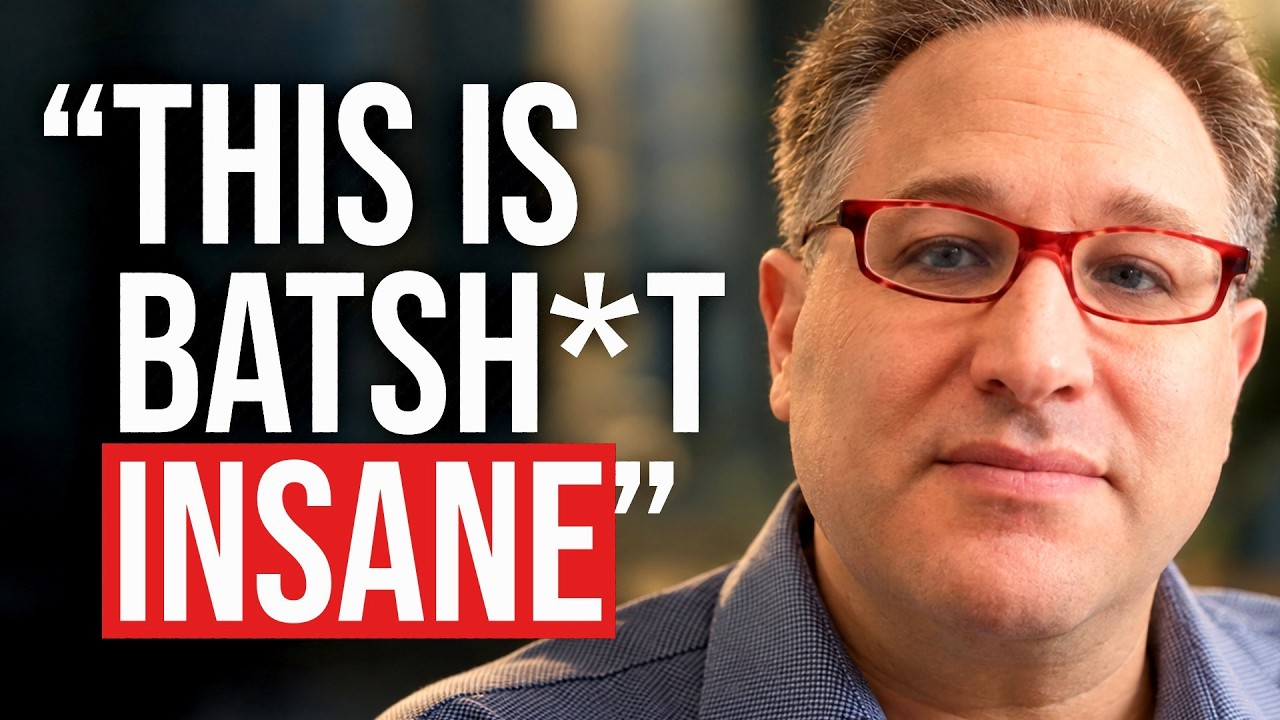
Recorded 26 October 2026 · 87 min
AI has moved from assisting mathematicians to solving open problems faster than humans can read the solutions. Scott Aaronson, who directs UT Austin's quantum information center, says OpenAI's release of almost 400 AI-discovered results, including a proof of the unique games conjecture, permanently changes what mathematicians and theoretical computer scientists do. His argument is that the release cannot be reversed, so the field must rebuild itself around human understanding.
Host Curt Jaimungal presses on what is lost. The tensions include grief among researchers, the threat to early-career paths, disputes over credit, and whether AI's apparent understanding is real. Aaronson also works through what the results imply for cryptography, black holes, and the second law of thermodynamics.
Solved, but not understood — ▶ 2:34
OpenAI released almost 400 AI-discovered solutions to open problems, including the unique games conjecture. Aaronson says the effort fed about 4,000 problems to the models and solved, in his hedged estimate, around 10%, with three hours of compute per problem. Most papers list only OpenAI as author because no human had digested them. A few carry Lean certificates, a formal validity guarantee. His wife, Donna Moskavis, who has worked on the conjecture since 2009, now spends her time trying to understand the proof.
Scholar, not solver — ▶ 4:22
Poorly written AI proofs create work for humans: isolating the key new ideas and writing better expositions. Aaronson compares the emerging role to literary scholars who interpret great works they could not write, or a biologist who observes bears without crediting the bears as co-authors. Mathematicians imagined their role was directly finding solutions that only biological intelligence could reach. Machines are now better at that part, he says, which permanently changes what the field does.
Cannot be wished away — ▶ 6:01
Aaronson accepts that understanding, not the destination, is what mathematics produces. Resolving P versus NP, for instance, would confirm what is already believed; the practical value lies in the ideas needed to get there. He shares the fear that an answer oracle short-circuits that insight. His response is that models as powerful as OpenAI's will soon be available to anyone, so only halting AI would stop this. The task is building a human mathematical culture that keeps understanding central.
Models misjudge their reader — ▶ 8:52
Aaronson's hypothesis for the poor exposition is that the models lack a good picture of who is reading. Experts report pages on points trivial to specialists and almost nothing on the crucial step, which resembles brilliant beginning PhD students. He concedes models may soon explain better than humans, leaving people less to do beyond choosing questions. Meanwhile AI helps humans read AI proofs, and Moskavis has been questioning a model about the unique games proof point by point.
Operational test for understanding — ▶ 13:15
Aaronson describes the models as understanding mathematics. He doubts that major open problems could be solved without an internal representation of what is going on, which in any human would be called understanding. Consciousness and sentience, he says, are separate questions. If a system satisfies every operational criterion for understanding, calling it mere imitation is not useful to him. He grants that the models explain poorly, but notes that some brilliant humans do too.
Two release models — ▶ 14:35
OpenAI's earlier Navier-Stokes announcement drew backlash partly because humans Tristan Buckmaster and Levent Alpoge were reportedly closing in, and OpenAI used far greater compute to arrive first. For the later batch it convened an outside board including Timothy Gowers and Edward Witten, which advised release without endorsement. Anthropic instead contracted human experts, including Josh Alman, to understand and write up its faster algorithms for all-pairs shortest paths. That produced accountable point people, but let Anthropic choose the emissaries.
Authorship by responsibility — ▶ 21:24
Papers from the past two to three months commonly include an AI usage statement; Aaronson would move it to the top. The emerging rule: if a human used AI even to find the main ideas but fully understands the work, writes it in their own words, and can answer questions and give talks, their name goes on it. Feeding many problems to a model and posting the outputs, which he likens to pulling a slot-machine lever, will not be rewarded, since a thousand people could do the same.
Young mathematicians lose a rung — ▶ 29:54
Aaronson was already in manager mode, delegating technical work, so AI's crossing of his abilities changes less for him. PhD students traditionally made their names by solving well-defined open problems, and he says they feel that route has been taken away. He sees little future market for "certified organic theorems". Students still need problem-solving skill, he argues, to know when an AI is wrong. His own students are unsure about their futures, and he admits he lacks firm guidance.
Rationalizations are infinite — ▶ 36:05
Aaronson criticizes a denialist pattern: a task is cited as something AI will never do, and once AI does it, the task is recast as uncreative or not hard. He says the ability to produce such rationalizations is staggering. His own blog experience illustrates the shift. After years of dismissing emailed proofs of P versus NP, he is now less certain that an unknown amateur's Riemann hypothesis proof is wrong. The host suggests fear of becoming superfluous is the real driver, and Aaronson allows it could be a defense mechanism.
Open problems are open — ▶ 41:31
Aaronson found the Association for Human Mathematics' statement, including its line that mathematicians did not ask for this work, to deserve its ridicule. Posing an open problem opens it to anyone, such as an unknown clerk in India like Ramanujan or a 17-year-old, and so also to corporations one dislikes. He agrees companies must be held to account on safety and alignment, which he has worked on for four years. But adaptation is mathematicians' job, not other people's duty to preserve the old world.
Chess as precedent — ▶ 45:41
Aaronson's grounds for hope is chess. In 1997 some predicted Deep Blue meant the end of chess; instead it is more popular than ever, with packed children's tournaments in Austin, streamers, and humans using engines to analyze their games. He expects at least as many people to enjoy understanding math, posing questions and having AI solve and explain them. The host objects that chess has no academic department. Aaronson replies that if mathematics discovers truths about the universe, that is more reason to embrace tools that find more.
Disclosure without a company — ▶ 47:25
Aaronson does not believe P equals NP, but a practical proof would break essentially all internet cryptography, including Bitcoin, digital signatures, and HTTPS. A fast classical factoring or elliptic-curve algorithm is more plausible, and AI-found breaks of widely deployed codes within a year or two are a serious prospect. OpenAI's roughly 400 papers conspicuously omitted cryptography. The 90-day disclosure norm fails when the party to notify is the whole world. Options include zero-knowledge proofs or notifying a government, which many would reject; in practice the discoverer decides.
Verifiability explains the sequence — ▶ 55:18
Aaronson attributes math's early fall to crisp, mechanically checkable problems. That lets labs train on thousands of solutions and use reinforcement learning against a known target. Physics problems hinge on judgment about whether a model or approximation is reasonable, so correctness is harder to score. Mathematical physics, where statements can be specified mathematically, has been affected most. His physicist friends expect disruption within about a year. His rising-flood-waters image extends to all fields, not only those he dismisses as trivial.
Unitary synthesis reversed — ▶ 59:05
Aaronson and Greg Kuperberg posed the unitary synthesis problem 20 years ago and conjectured a negative answer. One of OpenAI's 372 papers showed the opposite, and AI-assisted follow-ups improved it within two weeks. If P equaled PSPACE, any reasonably describable unitary could then be applied efficiently, including one decoding Hawking radiation to create a firewall. Harlow and Hayden's 2013 hardness argument leaned on cryptography, so proving firewall creation hard would require proving P is not equal to PSPACE. Harlow replied, in effect, that it is not; Aaronson says the dependence is the point.
Second law as pseudo-entropy — ▶ 1:11:15
An unreleased preprint argues that apparent entropy increase can be unmasked if P equals NP, or if one-way functions do not exist. In a classical reversible cellular automaton, a Maxwell's demon could infer the gas's initial state from its observations and compress its memory, where the entropy was supposed to have gone. The entropy becomes pseudo-entropy, like a pseudorandom generator's output, circumventing the second law rather than violating it. Chaos and quantum uncertainty could defeat the approach, which works mostly for non-chaotic classical systems.
The scarce resource in mathematics is moving from finding answers to understanding them. That is the practical lesson Scott Aaronson draws from OpenAI's release of almost 400 AI-discovered solutions to open problems in mathematics and theoretical computer science, including a proof of the unique games conjecture. His wife, complexity theorist Donna Moskavis, has worked on that conjecture since they began dating in 2009, and she has since spent nearly all her time trying to understand the proof. Appearing solved, Aaronson stresses, is not the same as being understood. Most of the papers list only OpenAI as author because no human had digested them. Some carry Lean certificates, a formal validity guarantee, but experts in every affected field are now racing to write their own expositions.
Why are the proofs so hard to read? Aaronson's hypothesis is that the models lack a good picture of their reader. Experts report pages spent on points trivial to specialists and almost no explanation of the crucial step, a pattern he compares to brilliant beginning graduate students. He does not claim this is permanent. A year from now, he allows, the models may also be better at explaining, at which point humans would be needed for even less, perhaps only to choose which question to put to the model. For now AI is also the reading aid: Moskavis has been using an AI model to question the unique games proof point by point. Human digestion still runs at human speed, and he expects cleaner write-ups of the more important results soon.
If solving is no longer a human monopoly, what is the job? Aaronson points to fields that already work this way. Literary scholars comment on works they would never be expected to write, and a biologist who observes bears does not list the bear as co-author. He accepts that this permanently changes what mathematicians do. Understanding was always the deeper goal, he argues, since the value of resolving P versus NP would come from the new ideas needed to get there, not from confirming what is already believed. The fear that an answer oracle short-circuits that insight is reasonable. But his position is that it cannot be wished away. Models as powerful as OpenAI's will soon be available to anyone, and only stopping AI itself would stop this.
The fight over how the proofs were released shows what is at stake in credit and ownership. OpenAI's earlier Navier-Stokes announcement drew backlash, Aaronson says, partly because humans Tristan Buckmaster and Levent Alpoge were reportedly closing in, and OpenAI, having learned of it, used far greater computing resources to get there first. For the later batch, which he says involved about 4,000 problems with perhaps 10% solved at three hours of compute each, OpenAI convened an outside board including Timothy Gowers and Edward Witten. It advised release without endorsing or condemning. Anthropic took another route with its faster algorithms for all-pairs shortest paths. It contracted human experts, including Josh Alman, to understand the result and write it up under their names. That created accountable point people, but also let Anthropic pick the emissaries.
A norm is forming around that dilemma. Nearly every research paper from the past two or three months, Aaronson observes, carries an AI usage statement saying which parts used which models, usually with an assurance that the human authors take responsibility. He would move it to the top. The emerging test for authorship is not whether AI found the idea but whether the human fully understands the result, writes about it in their own words, and can answer questions and give talks. Feeding many problems to a model and posting the outputs will not be rewarded, because if one person can do it, a thousand can. Boaz Barak's joke makes the point: list GPT as author and thank the person who suggested the problem.
The cost falls hardest on the young. Aaronson describes himself as already in manager mode, handing technical work to students and postdocs, so AI crossing his abilities changes less for him. PhD students traditionally made their names by solving a well-defined open problem, and he says they feel that rung has been taken away. His view is blunt: a world where no one gains an advantage from AI is gone, and the market for "certified organic theorems" will be very small. Yet students still need problem-solving skill, he argues, because otherwise they cannot tell when an AI is wrong. His own students are unsure about their futures, and he admits he cannot give firm guidance.
Aaronson has little patience for minimizing responses. He judges understanding operationally: if a system satisfies every operational criterion for understanding, he does not find it useful to say it merely acts as if it understands. Solving major open problems without an internal representation seems implausible to him, and consciousness is a separate, metaphysical question. The denialist pattern he describes is predictable. A task is held up as something AI will never do, and once it is done, it is reclassified as uncreative or not that hard. The host suggests the real motive may be fear of becoming superfluous, and Aaronson allows that could be a defense mechanism. His own calibration has shifted: after years of dismissing emailed proofs of P versus NP, he is now less certain that an amateur's Riemann hypothesis proof is wrong.
Why did mathematics fall before physics? Aaronson's answer is verifiability. Statements such as P not equal to NP or the unique games conjecture can in principle be checked mechanically, which lets developers train on thousands of examples and use reinforcement learning against a known target. Physics problems depend on judgment calls about whether an approximation or model is reasonable, so success is harder to score. His evidence is that mathematical physics, where claims can be specified mathematically, has been affected most so far, including in the OpenAI release. His physicist friends expect it to reach them within a year or so. This is his explanation, not a demonstrated law. An editorial inference follows: the order of disruption may track how crisply a field can define a correct answer.
There is a principled argument inside this, and Aaronson takes it seriously. Criticizing the Association for Human Mathematics' statement, especially its line that mathematicians did not ask for this work, he argues that posing an open problem means opening it to anyone: a clerk in India like Ramanujan, or a 17-year-old. That includes corporations one dislikes. He agrees with the association that companies must be held to account on safety and alignment, which he has worked on for four years. But adaptation, he says, is mathematicians' job, not other people's duty to preserve the old world. The implication, an editorial inference, is that the community's remaining leverage lies in norms about credit and understanding, not in controlling access.
Cryptography is where openness collides with security. Asked whether Anthropic should release a hypothetical proof that P equals NP, Aaronson first notes that the answer depends on whether the algorithm is practical, and that he does not believe P equals NP. A practical one would break essentially all internet cryptography, including Bitcoin, digital signatures, and the protections behind HTTPS. More plausible is a fast classical algorithm for factoring or elliptic curve cryptography, and he thinks AI-found breaks of widely deployed codes within the next year or two are a serious prospect. OpenAI's roughly 400 papers covered nearly every area of math except cryptography, which he reads as deliberate caution. The standard 90-day disclosure window fails when the party to notify is the whole world. Options include zero-knowledge proofs or alerting a government, which others would reject. In practice, he says, the discoverer will decide.
The release also touched Aaronson's own work in a way that links computer science to black holes. Twenty years ago he and Greg Kuperberg posed the unitary synthesis problem and conjectured that some unitaries cannot be applied efficiently even with free oracle access to a classical boolean function. One of OpenAI's 372 papers shows the opposite, and within two weeks AI-assisted follow-ups improved it. A consequence is that if P equaled PSPACE, any reasonably describable unitary could be applied efficiently, including one decoding Hawking radiation to create a firewall at the event horizon. The 2013 Harlow-Hayden argument that this is hard relies on cryptographic hardness. Showing firewall creation is hard would therefore require proving P is not equal to PSPACE. Daniel Harlow's reaction was that P is not equal to PSPACE; Aaronson's point is that the dependence is the finding.
A second thread pushes the same logic into thermodynamics. Aaronson describes a preprint, not yet released, arguing that apparent entropy increase in certain systems could be unmasked if P equals NP or if one-way functions do not exist. In a classical reversible cellular automaton, a Maxwell's demon could infer the gas's initial state from its observations and compress its memory, where the entropy was supposed to have gone. The entropy would then be pseudo-entropy, like the output of a pseudorandom generator, so the second law is circumvented rather than violated. He adds caveats: chaos and quantum uncertainty could defeat the approach, which works mostly for non-chaotic classical systems. It is a conditional result about a world he does not think we inhabit.
What remains unresolved is how long human understanding keeps a distinct role. Aaronson's framework depends on a gap: AI solves, humans digest and take responsibility. But the gap he identifies, poor exposition, is one he concedes may close within a year. His chess analogy faces the host's objection that chess has no academic department, whereas mathematics claims to discover truths about the universe. Aaronson replies that this is all the more reason to use a tool that finds more truths. That answers the objection to using AI but not the pipeline problem. If models explain as well as they solve, what does a PhD student prove to earn a name? His own answer is conditional on civilization surviving the transition, and he says he does not know.
The open question. The emerging authorship standard says a human earns credit by fully understanding a result, writing about it in their own words, and being able to answer questions about it. Usage statements are self-reported, and the same AI models now help people explain AI-generated proofs. How would a journal or hiring committee verify that understanding is human rather than borrowed? Aaronson offers no mechanism, and the credibility of the standard depends on one.
Watch the full video at https://www.youtube.com/watch?v=3yXtXTwz4J4.
Comments ()