Recorded 20 October 2026 · 49 min
Matthijs Wellem, CEO of hotel software company Mews, argues that AI tools alone did not raise output. The gain required dismantling an organization with seven layers between him and the front line. Shortly after Mews raised $300 million at a reported $2.5 billion valuation, it restructured 170 people, a move he says neither investors nor cash flow forced.
The tension is between speed and human cost. Wellem defends an intense, high-performer-centered culture and a venture growth target of 30-40% a year. He also concedes that some of his decisions about who fits the new roles may be wrong, that remaining staff feel uncertain, and that the layoff experience has made him more hesitant to hire in Europe. Whether AI-native structures deliver the promised output is still a bet.
AI slop burden — ▶ 5:40
Wellem says AI-written internal memos and reports make life easy for the author and much harder for the 20 people who must read them. The cost of producing text falls while the cost of consuming it rises. For that reason he does not use AI to write feedback. He rereads each sentence three times to confirm it addresses the work rather than the person, and he stresses separating task-related feedback from personal criticism, which he says some people take personally too soon.
Bureaucracy, not tools — ▶ 6:25
A few months into the year, Mews saw how fast Claude was developing and saw its teams embracing it, but output did not follow. Wellem blames structure. The company had not reorganized in 5 years while growing from 220 to 1,300 people, leaving seven layers between him and the person at the other end, and six managers debating decisions or relaying messages. He says the restructuring was neither planned beforehand nor pushed by investors, and that cash flow was healthy.
One builder replaces a team — ▶ 7:44
The traditional product team of seven or eight people, covering front end, back end, QA, data, product management and design, is now one role at Mews. Deep specialists build AI skills, and 150 builders use them to ship products end to end: speaking to customers, designing with AI agents, checking back with customers and deploying to a live system. Wellem says engineers who doubted AI a year and a half to 2 years ago now say it is fantastic.
Not everyone will thrive — ▶ 8:34
Two engineers the host spoke to this week were nervous about phoning customers as product builders. Wellem accepts that not everyone will thrive in the new role. The restructuring rested on assumptions about who would fit, some people left, and he concedes the company may have been wrong on some decisions. He told the nervous engineers they must jump and may learn to swim, arguing that live customer feedback and coding in front of the customer will energize many.
Sequenced layoff communication — ▶ 10:26
Mews spent about 6 weeks preparing. Day one addressed those leaving, day two those staying, and day three the long-term vision, set out in a memo positioning Mews as the harness for hospitality with AI built in. Affected staff received calendar invites and, within 3-4 hours, one-on-one conversations and fair packages. An engagement survey 6 weeks later showed remaining staff feeling uncertain. Wellem calls that natural and forecasts improvement within 3 months, a prediction rather than a result.
AI fluency by role — ▶ 11:34
No one can apply to a tech company without using AI, Wellem says, but he describes four levels of usage, without enumerating them, and not every role must live in AI. Salespeople should be out with customers, yet need to understand prompting and build innovations for themselves. They must be more advanced than their customers so that buyers leave having learned something. Wellem wants sales to be inspiring rather than second-hand salesmanship, and ability to learn is a hiring criterion.
Hotels on a curve — ▶ 12:33
Hotel AI adoption follows a normal curve: early adopters are transforming, while the majority think they can still check guests in and out. Wellem's example is an automation product he tested that day, where a rule such as assigning room 207 to a disabled guest and notifying them replaces memory that high staff turnover erodes. The host adds that WhatsApp messaging gives near-instant responses compared with email, so poor service now has few excuses. Wellem agrees completely.
Balance bounded by mission — ▶ 16:54
Wellem clarifies his earlier work-life balance comments: the company creates conditions, including unlimited holiday that some staff use for 30-35 days, but freedom has limits. Someone seriously underperforming and absent 5-6 weeks would be questioned. He says Mews is very intense and few have balance, yet engagement is high because staff are transforming an industry. He rejects the ping-pong-table office, and says he has no balance himself but is happy, working roughly 65 hours last week.
Growth math and acquisitions — ▶ 24:14
Continuing as is would give Mews a 20% growth year, Wellem says, but venture-backed growth means 30-40%, so the company must accelerate and reorganize regularly. Mews has made about 14 acquisitions and receives inbound approaches at least twice a week. Product acquisitions now appeal less because it can build much faster. It buys legacy competitors instead, seeing them as customers. The implied logic, which Wellem does not state, is that acquisition value is shifting from technology to customer bases.
Founder brand as distribution — ▶ 27:36
Wellem posts 3-4 times a week on LinkedIn, each text post taking about 1.5 hours, often written on planes. The mix covers customer stories, product demos and personal topics. Posts about entrepreneurial struggle reach about 100,000 people, against a few thousand targeted viewers for product content in vertical software. He credits the effort with a humongous amount of business and notes his main competitor has no visible founder. He also says AI-generated posts are lowering platform engagement.
Europe raises hiring hesitancy — ▶ 33:54
The Netherlands is a great place to live, Wellem says, but employment rules make it hard to scale. Long-term sick leave can mean paying salary for a long time, and layoffs are significantly easier in the US. His lesson from the reorganization is that flexibility to scale up and down fast is key, and he is now much more hesitant than a few months ago to hire in Europe. He still hopes for more employees in 2030 and says the talent is here.
Time with top performers — ▶ 46:45
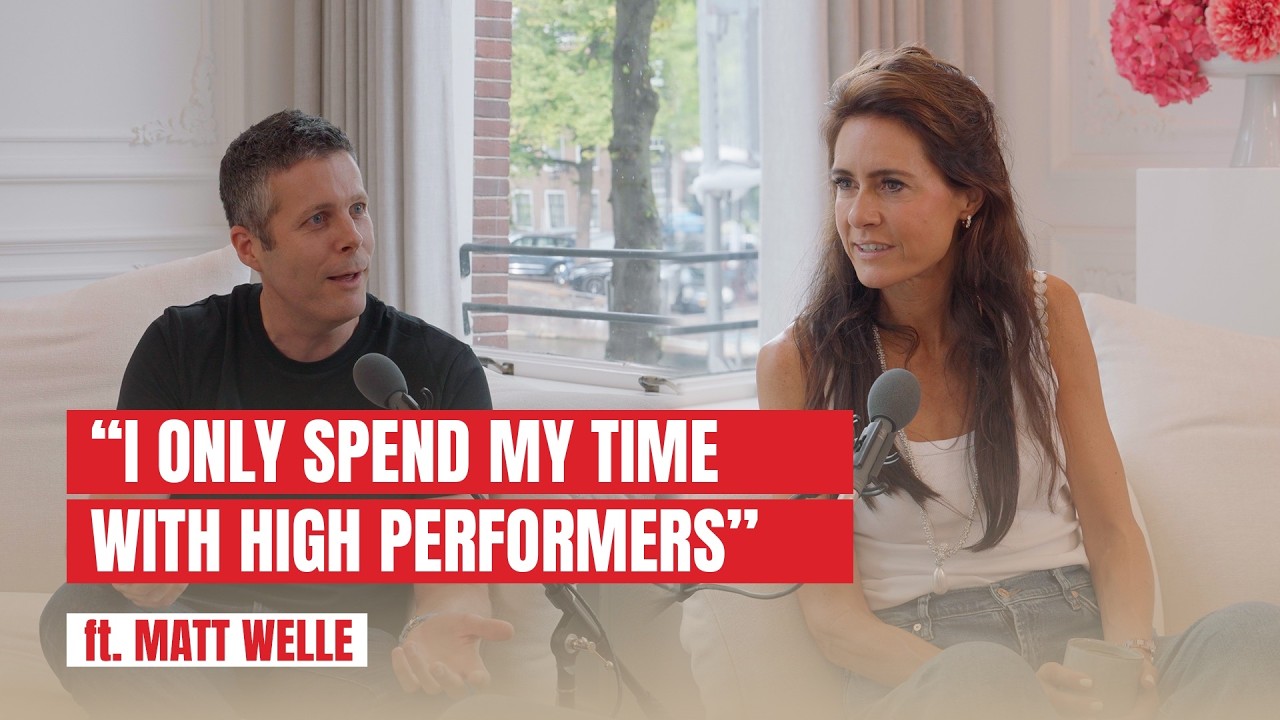
After each performance cycle, Wellem gets an HR file of high performers, and his assistant books 20 minutes with three of them every week. He records the conversations and uses AI to extract learnings. Most say underperformance is not addressed fast enough, because they carry the slack. Wellem argues that if top performers leave, Mews may keep 1,000 employees but not its best. He rejects criticism that he should also spend time with underperformers, wanting to learn what makes top performers different.
The constraint on AI at Mews was the organization, not the technology. That is Matthijs Wellem's diagnosis of why he restructured the company within months of closing a $300 million round. A few months into the year, he says, Mews saw how quickly Claude was developing and saw its teams embracing it, yet the output did not appear. Work stalled in committee. The company had not reorganized in 5 years, during which it grew from 220 to 1,300 people, and its structure had grown organically into something he calls unsustainable: seven layers between him and the person at the far end, with six managers in between debating whether decisions needed making or relaying messages up and down. He says neither investors nor a cash shortage prompted the move.
If AI absorbs specialist labor, teams built around those specialists become overhead. Wellem's clearest example is the product team. The traditional unit of seven or eight people, with a front-end developer, two back-end developers, a QA person, a data person, a product manager and a designer, has been replaced by a single role. Mews now has 150 builders who develop products end to end. Deep specialists build the AI skills that builders use. Each builder talks to customers, designs with AI agents, returns to ask whether it works, and deploys into a live system. Handoffs between functions disappear, and with them the committees. Engineers who doubted AI a year and a half ago, Wellem says, now call it fantastic.
The new role is harder, and Wellem does not pretend otherwise. Two engineers the host spoke to this week were nervous about phoning customers. Wellem's answer is that not everyone will thrive and that this is acceptable. The reorganization rested on assumptions about who would fit the new roles, some of those people left, and he concedes the company may have been wrong about some of them. That candor shows the bet's real shape: individual judgments made under uncertainty, not a validated selection method. The aftermath is unfinished too. Six weeks after the reorganization, an engagement survey showed remaining staff feeling uncertain. Wellem calls that natural and predicts things will be much better in 3 months, which is a forecast, not a finding.
The same logic governs hiring and retention. Wellem says nobody can apply to a tech company without using AI, though he describes four levels of usage and does not expect every role to live inside it. A salesperson should be out with customers but must understand prompting and be more advanced than those customers, so that they leave having learned something. For retention, he takes a stance the host calls un-Dutch. After each performance cycle he obtains a list of high performers, and his assistant books 20 minutes with three of them every week. Most tell him underperformance is not dealt with fast enough, because they are picking up the slack. If they leave, he says, Mews may keep 1,000 employees but not the best ones.
Speed is the premise underneath all of it. Wellem says a venture-backed company cannot simply continue as it is: doing what Mews does now would produce a 20% growth year, whereas venture-backed growth means 30-40%. The gap has to be closed by accelerating, and he says a company growing that fast must reorganize regularly. That reframes the restructuring as a response to a growth target rather than a one-off. It also changes how he deploys capital. Mews has made about 14 acquisitions, and product acquisitions now appeal less because it can build much faster. It buys legacy competitors instead and treats them as customers. The inference, which Wellem does not state, is that cheaper building shifts acquisition value from technology to customer bases.
Wellem is candid that this model costs the people inside it. Working 60 to 70 hours a week while exercising daily and sleeping 8 hours, he says, leaves his social life as the thing cut. He compartmentalizes, takes no calls after 7:00 and goes to bed at 10 past 9:00. On work-life balance, which drew online criticism after the previous episode, he clarifies that the company creates conditions, such as unlimited holiday that some staff use for 30-35 days, but that trust has limits. Someone seriously underperforming and out for 5-6 weeks would be questioned. Retention in a demanding place comes from mission rather than perks, he argues. He says he has no balance but is happy.
His complaints about AI-generated writing suggest a parallel with his diagnosis of Mews: cheaper individual output does not lower the cost of coordination. Memos written with AI are easy for the author and harder for the 20 people who read them, he says. He sees the same dynamic eroding LinkedIn engagement, even as the platform anchors his own strategy. He posts 3-4 times a week, each text post taking about 1.5 hours, and mixes customer stories, demos and personal topics. Posts about entrepreneurial struggle reach about 100,000 people, against a few thousand targeted viewers for product content. His largest competitor, he notes, has no visible founder.
Europe is where the speed premise runs into law. Wellem calls the Netherlands a great place to live but a hard one in which to scale. Long-term sick leave means paying a salary for a long time, and he says layoffs are significantly easier in the US. His takeaway from the reorganization is that the ability to scale up and down fast is a key component of a thriving business, and he is now much more hesitant to hire in Europe. He does not predict retreat. He hopes to have more employees in 2030, says Mews is hiring aggressively for different roles, and thinks founders should still try here. He does not expect a minority government to change the rules.
The evidence for the central claim is thinner than the conviction behind it. Everything about the reorganization comes from Wellem, and the conversation offers no output measure showing that builders ship faster or that committees were the binding constraint. A Glassdoor reviewer, quoted by the host, said the company restructures every year. Wellem accepts the point as valid but ties it to growth of 30-40% annually. The high-performer conversations carry a selection bias, since managers and HR nominate the people he hears from. They report what top performers perceive about underperformance, not whether it is in fact handled slowly. None of this refutes him. It marks the distance between a persuasive diagnosis and a demonstrated result.
The test now sits with the people who remained. By Wellem's own retention logic, top performers are the ones whose departure would hollow out the company, and they are also the most frustrated by slow action on underperformance. Meanwhile the wider staff report uncertainty. The restructuring has tightened a bind: he must hold high performers who value speed, convince uncertain colleagues that the builder role is a place to grow, and sustain the 30-40% growth he says venture backing requires, with fewer layers and more cautious hiring in Europe. If the builder model works, the gap between 20% and 40% growth comes from structure rather than headcount. If it does not, growth is where the failure would show first.
The open question. The restructuring was triggered by AI adoption that was not producing output, yet the conversation offers no measure of whether output has improved since. Wellem's assumptions about who would thrive as builders were made in the moment, remaining staff report uncertainty, and the high performers he most wants to keep are the ones pressing for faster action on underperformance. Does a flatter, builder-based structure actually sustain the 30-40% growth he says venture backing requires, and will the people who stayed remain long enough to find out?
Watch the full video at https://www.youtube.com/watch?v=6uvlGRXhRx0.
Comments ()