Recorded 8 October 2026 · 34 min
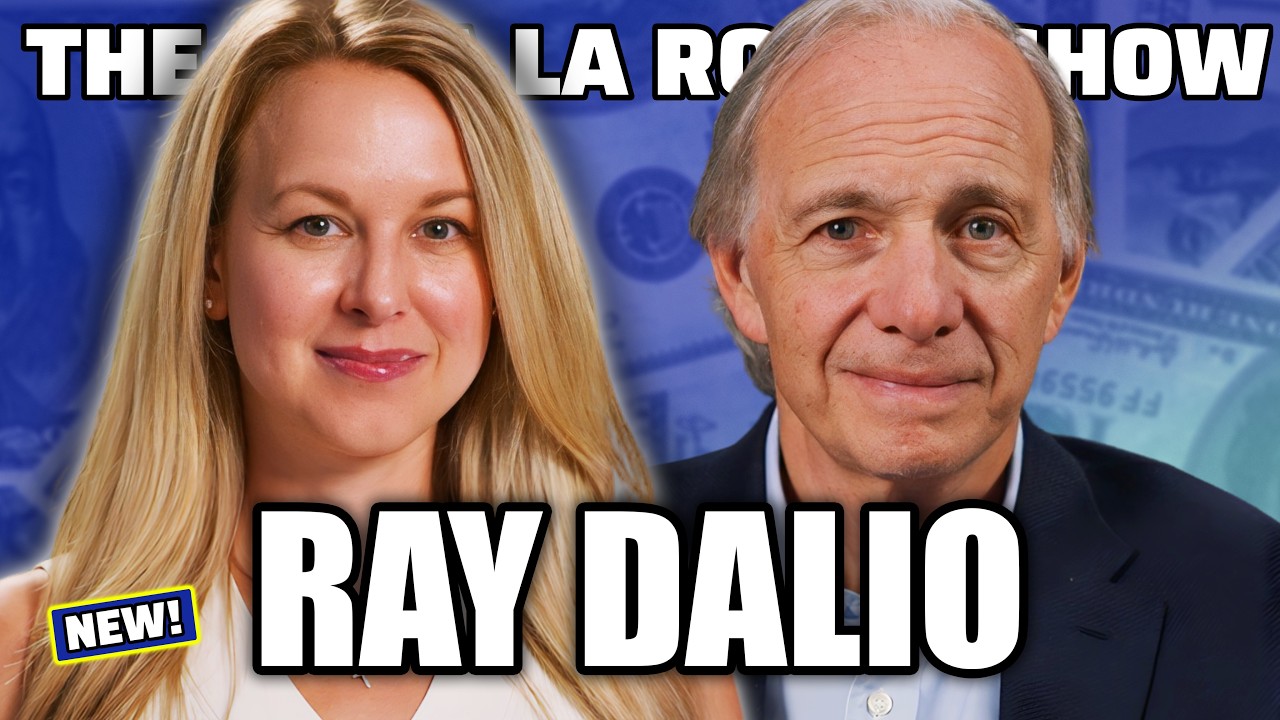
Ray Dalio, founder of Bridgewater Associates, argues that the US is on the brink of a debt-driven squeeze in which the supply of government and AI-related debt outruns demand. He expects markets to feel the strain within roughly two years, with the period after the midterm elections through 2028 the most vulnerable. Speaking with Julia La Roche at the Greenwich Economic Forum, he frames this as one stage in a cycle he traced across 500 years.
The tension is between a confident diagnosis and an openly uncertain timeline. Dalio calls the present a bubble by his own indicators and says he is short debt. He also concedes he does not know exactly when stress will arrive, and that what an investor does not know exceeds what they do. His answer is therefore a portfolio posture, not a market call.
Devaluation as teacher — ▶ 1:38
Dalio's framework began on August 15, 1971, when he was clerking on the New York Stock Exchange floor and Richard Nixon ended gold convertibility on television. He expected a crisis, but stocks rose sharply. He then found that Franklin Roosevelt's 1933 devaluation had the same effect. The lesson he drew was to study periods before his lifetime. Studying the 1930s, he says, let him recognize a debt crisis with interest rates at zero when it recurred in late 2007, and Bridgewater made a lot of money. He then extended the study to 500 years.
Five interlocking forces — ▶ 3:12
Dalio organizes events into five forces: the long-term debt and capital cycle, internal political and social conflict, geopolitical order, acts of nature, and new technology. The debt cycle works like plaque building up: as debt service rises relative to incomes, it squeezes spending. Large wealth and values gaps feed populism and irreconcilable left-right conflict. Droughts, floods and pandemics have historically killed more people than wars, and he flags a coming super El Nino. The forces are interrelated, so a breakdown in the economy spills into politics and geopolitics. Most topics people debate fall into one of the five.
Multilateralism has ended — ▶ 4:47
Dalio sees geopolitical order as cyclical: a big conflict produces a winner, the winner sets the rules, the system builds up, and conflict returns. The US won in 1945 and designed a multilateral system, with the United Nations, a world court, the World Trade Organization and the World Health Organization, premised on resolving disputes by vote. He says that era is over. What replaces it is a power-based order, in which each party enforces what it can, and he expects this to produce greater conflict. He treats this as a structural shift, not a temporary lapse.
Bond supply outruns demand — ▶ 9:38
Dalio attributes rising yields to a supply-demand imbalance in debt. He says the US central government spends $7 trillion a year and takes in $5 trillion, so it must sell $2 trillion, and he says half of that is now interest, though his phrasing is ambiguous. It must also roll over existing debt, while AI and capital-expenditure borrowing adds to supply. Meanwhile demand is weakening: China and Japan are the two largest holders and have been pulling back, and foreigners own about a third of the debt. His account is mechanical, not sentiment-driven.
Anatomy of a debt heart attack — ▶ 13:09
Dalio says he expects a debt crisis, with credit tightening, rates rising and demand being rationed until the weakest borrowers, most likely homeowners with mortgages, are squeezed out. Markets typically feel it first, then the economy. Stocks have risen as bonds fell, so expected equity returns are low relative to bonds and the cushion is gone. He gives no precise date but suggests it will occur within the next two years. He expects Democrats to take the House and possibly the Senate in the midterms, intensifying internal conflict, and sees vulnerability through 2028.
Why bubbles pop — ▶ 17:54
By Dalio's definition and indicators, the market is in a bubble. His point is that a technology can be transformative, as in the 1920s with electricity, cars, radio and airplanes, and still produce a bubble when investors borrow to bet on it. Wealth is easy to create: raise $50 million at a $1 billion valuation and the owner is a billionaire. But wealth cannot be spent; it must be sold. Bubbles typically pop when holders need money to pay debts or wealth taxes. He says those ingredients are in place now.
Gold, 5-15%, and short debt — ▶ 22:18
Dalio says he thinks of positions from the short side too, and that he has been short debt. His reasoning is that debt is money and money is debt: a bond is a promise of money, and heavily indebted systems tend to devalue that money. Holding debt assets is therefore unattractive in this confluence. For a typical stock, bond and real estate portfolio, he calls gold the hard-money diversifier and suggests a balanced portfolio hold between 5% and 15%. He adds that the vulnerability of assets to rising interest rates deserves attention.
Bitcoin at 1% — ▶ 24:53
Dalio has long held about 1% of his portfolio in Bitcoin. He does not think it will be a great asset; he holds it to diversify away from gold as an alternative hedge money. His reservations are that the government can influence whether you hold it, it is not a private asset and can be watched, and it could be broken, a risk he says is heightened by AI. He says he would not recommend it, though he holds some assets in small amounts as diversifiers.
Own AI adopters, not hyperscalers — ▶ 25:56
Dalio calls the hyperscalers and other big AI bets expensive and overpriced. He thinks the better opportunity lies with companies being transformed by AI, which will either increase sales or cut costs, and he says these are not well priced in. He suggests monitoring them through revenue, costs and how much they are investing in AI. This is a view on where the AI payoff sits, not a rejection of the technology, which he says is certainly going to change the world. He offers no specific company names.
Surplus countries, inflation hedges — ▶ 27:28
Most of a portfolio should still sit in the US, Dalio says, because of its capital markets. For other regions he looks at finances, noting that capital-surplus countries should do better in the transition, and at whether a country is on the innovation wave. He names Singapore, parts of the Middle East, with the UAE building data centers, parts of Asean, and selective European companies. He also wants inflation hedges beyond gold, including leveraged inflation-indexed bonds, whose real yield he puts at about 3%. He says he looks at three factors but states only two clearly.
Connecticut's 22% problem — ▶ 31:31
Asked what makes a country or state successful, Dalio names three things: educate children well, including in civility; maintain a civil society that works productively; and avoid disruptive internal conflict or a bad international war. He adds basics such as earning more than you spend. Applying this to Connecticut, he says 22% of high school students have dropped out or are failing, with absentee rates above 25%, and a wealth and education gap makes this worse. His wife Barbara works in these communities. He argues communities are tied together, so productivity depends on collective balance.
Ray Dalio's central claim is that the present moment is a recognizable stage in a long cycle, and that the most immediate stress point is the market for debt. He says the US central government spends $7 trillion a year and takes in $5 trillion, leaving $2 trillion to sell. Demand is moving the wrong way: China and Japan, the two largest holders, have been pulling back, and foreigners own about a third of the debt. Borrowing to finance AI capital expenditure adds to supply. Dalio treats this imbalance as the pivot for everything else he says, from portfolio advice to his worries about American politics.
The method behind the claim matters as much as the claim. Dalio traces it to August 15, 1971, when, as a clerk on the New York Stock Exchange floor, he watched Richard Nixon end gold convertibility and expected a crisis. Stocks rose instead. He later found that Franklin Roosevelt's 1933 devaluation had the same effect, and concluded that he needed to understand periods before his lifetime. That led to a study of 500 years and to five forces: the debt cycle, internal political conflict, geopolitical order, acts of nature and technology. The forces interact, so a breakdown in one spills into the others.
The debt mechanism is the most concrete part of the argument. Dalio compares rising debt service to plaque in an artery: as interest payments grow relative to incomes, they squeeze out other spending. In markets, large supply drives yields up and credit tightens, and demand is rationed until the weakest borrowers, he suggests homeowners with mortgages, are squeezed out. The normal sequence is markets first, then the economy. Stocks have meanwhile risen as bond yields rose, so expected equity returns relative to bonds are low. In his words, the cushion is gone, which is why he expects upward pressure on yields to weigh on markets.
His bubble argument rests on a distinction between wealth and money. A transformative technology does not prevent a bubble, he says, pointing to the 1920s, when electricity, cars, radio and airplanes were visible to everyone and investors borrowed to bet on them. Wealth can be created by valuation: raise $50 million at a $1 billion valuation and an owner is a billionaire. But wealth cannot be spent; it has to be sold. Bubbles typically pop when holders must raise cash to pay debts or taxes. Dalio says the ingredients are in place now, and that by his indicators the market is in a bubble.
Politics and geopolitics enter the argument as amplifiers. Dalio says the multilateral order built after 1945 is over, replaced by a power-based order in which parties enforce what they can. Domestically, large wealth and values gaps produce populism and irreconcilable left-right conflict. He expects Democrats to win the House and possibly the Senate in the midterms, and expects the resulting conflict, which he says could include impeachment, to worsen the supply-demand picture until after the next presidential election. These political forecasts are his predictions, not facts, and he offers no evidence for them beyond the cycle logic itself.
From the diagnosis Dalio derives a defensive posture. Because debt is a promise of money, and heavily indebted systems tend to devalue money, he considers holding debt assets unattractive and says he has been short debt. For most investors, who will not go long and short, he suggests gold as the hard-money diversifier, at 5% to 15% of a balanced portfolio. He adds inflation hedges, including leveraged inflation-indexed bonds with a real yield of about 3%, and a 1% Bitcoin position he holds only as a diversifier and would not recommend. The logic is consistent: favor assets that do not depend on someone else's promise to pay.
AI appears in his account twice, as a source of debt supply and as a source of potential winners. He calls the hyperscalers and other big AI bets overpriced. He thinks companies transformed by AI, through higher sales or lower costs, are not well priced in, and suggests tracking them by revenue, cost and AI investment. Geographically, he keeps most capital in the US for its market depth but favors capital-surplus, innovative countries, citing Singapore, the UAE and selective European companies. The views are directional, with no named companies, so readers get a screen more than a portfolio.
The obvious limit is timing. Dalio says he does not know exactly when strain will occur, then places it somewhere in the next two years, with vulnerability extending through 2028. That is a wide window for a call framed as a risky period. He is candid about this, and he draws the sensible conclusion that the answer is the same as if you did not know: stay well diversified. But it leaves the framework hard to test. A bubble defined by his own indicators, a crisis with no date and political forecasts that are probabilistic can all be consistent with many outcomes.
Dalio ends not with markets but with Connecticut. A successful society, he says, educates its children, maintains civility and avoids damaging conflict, and he notes that 22% of the state's high school students have dropped out or are failing. The turn is revealing. Of the five forces, internal order is the one communities can most directly affect, and he treats it as tied to the economic cycle. If wealth gaps and weak education feed the populism he fears, then the political risk he forecasts for 2026 to 2028 may depend on choices made long before the next election.
The open question. Dalio describes two possible ways a debt squeeze resolves: credit rationing as rising rates squeeze out borrowers, and, further down the line, a devaluation of money. He does not say which dominates or in what order, and his timing is bracketed as somewhere in the next two years. If the squeeze arrives as rationing, bonds and gold might behave differently than if it arrives as devaluation, so the sequencing matters for the allocations he recommends.
Watch the full video at https://www.youtube.com/watch?v=Wh_RtDiAEuE.
Comments ()