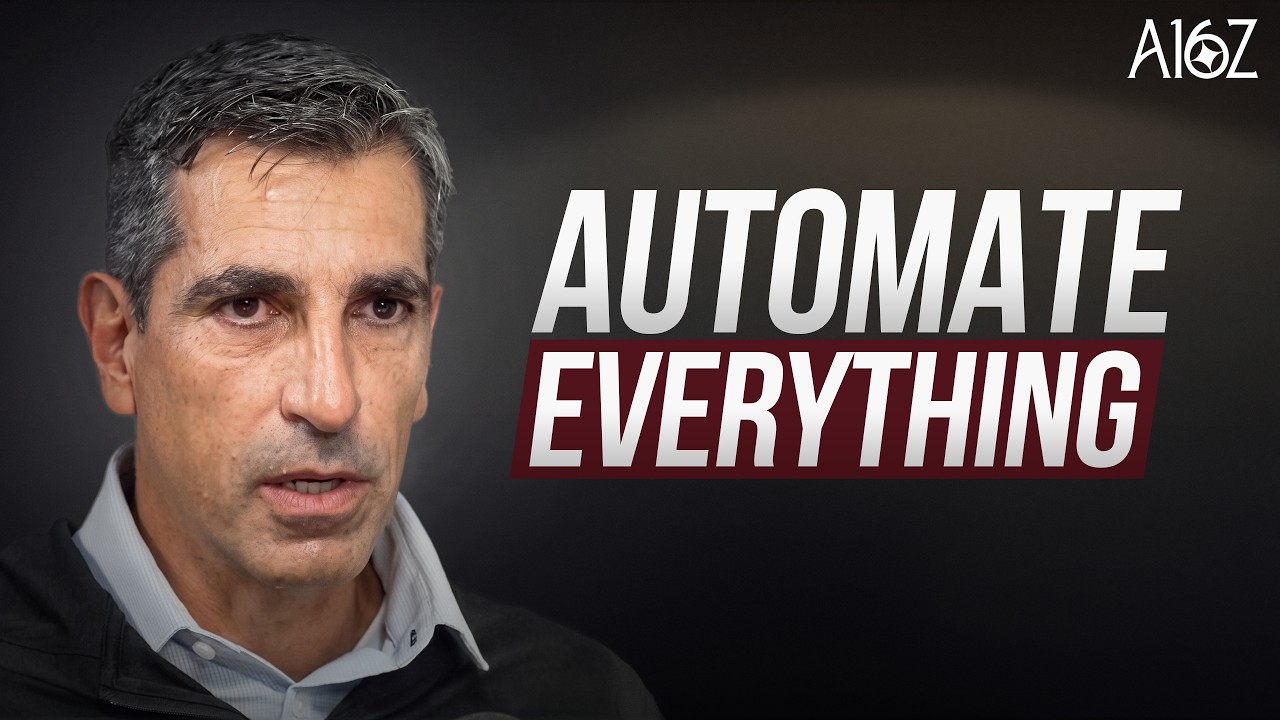
Recorded 15 October 2026 · 50 min
Terry Angelos, chief strategy officer and board member of VGS, argues that AI agents became far more useful in roughly 3 months because they gained payment credentials, moving from recommending purchases to completing them. VGS vaults credentials for about a third of e-commerce by GMV, so he speaks from the plumbing layer where agents, wallets and merchants meet.
The tension is trust. Early agentic checkout relied on proprietary workarounds that disrupted chargebacks and merchant relationships, while open card-network standards are only beginning to replace them. Alex Rampell of Andreessen Horowitz, Angelos's former TrialPay co-founder, presses on liability, merchants' incentive to block agents, and which early consumer gains will survive scale.
Agents gain arms and legs — ▶ 11:56
Angelos says agents went from spectators to actors in about 3 months because payment credentials let them execute tasks rather than suggest them. His example: an agent found piano teachers for his 7-year-old, asked questions, checked schedules around soccer 3 days a week, and booked a first lesson, where earlier ChatGPT only returned recommendations. The mechanism is utility. An agent that completes a task is worth more than one that adds work to the user's list. The evidence is a personal anecdote, not measured adoption data.
Why merchants outsource vaulting — ▶ 4:51
Card networks now issue domain-bound network tokens instead of merchants storing 16-digit PANs, which limits damage if a token leaks. Complexity compounds: about a third of cards turn over each year (roughly 25% from 4-year expiries, plus about 5% from events like Capital One moving cards to Discover or fraud). Merchants with $1 billion in GMV typically run 3-5 processors, multiplying vaulting and update work. VGS positions itself as neutral infrastructure that handles tokens and updates across processors, so stale-card failures should not occur.
Wallet wars: reach versus scale — ▶ 13:43
Agents want wallets with many consumers and broad merchant reach. Angelos cites Stripe Link at about 300 million consumers and 1 million merchants, Shop Pay at a similar consumer base with about 1.7 million merchants, and PayPal at over 400 million accounts and about 30 million merchants. The contest echoes earlier wallet battles over being the default credential. Angelos recalls issuers paying tens of millions of dollars to be top-of-wallet at Uber and Airbnb. Agent wallets add an abstraction layer above that fight.
Stripe as the AOL — ▶ 20:05
Angelos calls Stripe the AOL of agentic commerce: a walled garden that works. When Link had no Walmart connection, Stripe bought his outdoor lights with a one-time Visa virtual card, then charged him separately. The costs show up afterward. His bank would see only a Stripe transaction, so chargebacks break. One tester's Amex call reportedly ended at a Stripe engineer's cell phone. Walmart's follow-up Walmart Plus offer also failed because the card on file was the one-time card.
Agentic tokens preserve chargebacks — ▶ 24:04
Card networks' agentic tokens let a wallet hand the agent a credential tied to the user's own card, with a verified agent and a spending cap such as $100. The token is a new 16-digit number, so the merchant charges the customer's actual card. That preserves follow-on sales and chargeback rules, which Rampell calls the trust mechanism that makes buyers willing to purchase. Angelos says volume was zero 3 months ago and VGS, which he calls the largest provisioner, now does a few million tokens weekly. These are company-reported figures.
Vaults go multiplayer — ▶ 28:09
Angelos argues that vaults are shifting from single player to multiplayer, which raises their value. Multiple processors already made VGS's vault serve Chase, Stripe, Adyen, Braintree and Razorpay at once. Agents extend that: a frontier lab that vaults cards for subscriptions can now share the same credential with an agent under open standards. Rampell likens 1Password moving from personal storage to access for multiple parties. VGS reports about 10 billion credentials, and Angelos frames brokering among parties as its next layer.
Three tests, one unsolved — ▶ 29:40
Rampell frames a transaction as three checks: is the card valid, is the user the owner, and is the user of sound mind. Angelos says the first is solved, and the second is addressed by registering agents with Visa, Mastercard or Amex and passing context such as hotel amount. The third, whether the agent made an error like wrong dates, has no dispute mechanism. Rampell warns merchants will not accept delegation as an excuse, recalling friendly fraud, and suggests competing agents might assume liability. Angelos expects agents to take on some responsibility.
Merchants split on agents — ▶ 35:31
Rampell notes Amazon recently blocked an agent and attributes it to advertising economics: an agent has no eyeballs to sell. Angelos sees three postures: fear at Amazon, possible greed at Walmart given its inventory and last-mile delivery, and no choice for Shopify's small merchants who need a new channel. He compares it to open banking, where Plaid-style access settled into bank-controlled, tokenized APIs, perhaps with fees. Merchants may also deploy their own commissioned agents, like a Best Buy salesperson. Angelos expects consumers to win but cannot say how.
Overhyped savings, underhyped demand — ▶ 41:01
Angelos doubts agents will trigger savings-deposit runs by chasing yield. Friction persists: he keeps a Chase account because its bill pay has more integrations, even though Mercury pays more. The underhyped effect, he argues, is unmonetized demand. An always-on agent in his cycling group chat would buy tires whenever a friend recommends them, and agents could also cancel forgotten subscriptions. His premise that human desires are infinite is an assertion, not evidence, and he concedes the always-on effect remains unexperienced.
Asymmetry won't last — ▶ 43:40
Rampell argues many early agent wins, such as saved money or secured reservations, depend on asymmetry: few users and counterparties unaware of agents. Scale invites adaptation, for example companies demanding to speak with a human. Angelos adds that agents probing the edges of terms, like a flight priced just inside an upgrade threshold, will strain rewards programs, since agents would pick cards purely for points. He says any breakage-based model will weaken and need new terms, though he is unsure whether that is better or worse.
Angelos's central claim is that AI agents crossed a threshold in about 3 months, from spectators that recommend to actors that transact, because payment credentials function as their "arms and legs." His example is a piano teacher for his 7-year-old: an agent found candidates, asked questions, checked schedules around soccer 3 days a week, and booked the first lesson, where earlier ChatGPT had returned only recommendations. The evidence is anecdotal, but the mechanism is plain. An agent that finishes a task is worth more than one that adds to the user's to-do list. If that holds, whoever controls the credentials an agent can use gains leverage, and that is where the contest begins.
Angelos calls that contest the wallet wars. An agent wants a wallet with many consumers and broad merchant reach, and no wallet has both. By Angelos's figures, Stripe Link has about 300 million consumers and 1 million merchants, Shop Pay has a similar consumer base and about 1.7 million merchants, and PayPal has over 400 million accounts and about 30 million merchants. Rampell notes that fights over being the default credential are old. Angelos recalls issuers paying tens of millions of dollars to be top-of-wallet at Uber and Airbnb. The new fight sits a layer higher, among wallets that handle the transaction itself, and agents are the new prize.
The first working solution shows what is at stake. When Link had no connection to Walmart, Stripe bought Angelos's outdoor lights with a one-time Visa virtual card and then charged him in a second transaction. It worked, which is why Angelos compares Stripe to AOL, a walled garden that simply functions. But the costs arrived afterward. His bank would see a Stripe charge, not a Walmart one, and Angelos relays a story of a tester whose Amex dispute ended at a Stripe engineer's cell phone. Walmart's follow-up offer to join Walmart Plus failed because the card on file was the one-time card. The merchant lost its customer relationship.
Rampell supplies the reason this matters. Visa and Mastercard hold strong positions because they intermediate everything and set rules, and chargebacks are a trust mechanism that makes buyers willing to pay unfamiliar merchants. Crypto, as a bearer instrument, offers no such recourse. Angelos's answer is the card networks' agentic tokens. A wallet hands the agent a credential tied to the user's own card, the agent is verified, and a cap such as $100 applies. The merchant then charges the customer's actual card, so follow-on sales and chargebacks survive. Angelos says volume was zero 3 months ago and VGS, which he calls the largest provisioner, now processes a few million tokens a week. That figure is company-reported and unverified.
The infrastructure logic explains why VGS is positioned here. The company holds about 10 billion credentials and secures roughly a third of e-commerce by GMV. Merchants with $1 billion in GMV typically run 3-5 processors, and about a third of cards turn over each year, so storing a card is the easy part. Keeping tokens current across processors and networks is the work. Angelos describes a vault moving from single player to multiplayer. It once served one merchant, then several processors, and now agents acting on a customer's behalf. His inference, that multiplayer vaults become more valuable, is a thesis from an interested party, but it follows from the mechanics.
The harder problem is liability, and here the conversation admits a gap. Rampell breaks a transaction into three tests: the card is real, the person is its owner, and the person is of sound mind. Networks can now handle the first two by registering agents and passing context such as the hotel amount. The third has no mechanism. If an agent books the wrong dates, the network has done everything right and the dispute process has no answer. Rampell warns that merchants will not accept delegation as an excuse, and recalls friendly fraud and the moral hazard of banks refunding small disputes. Angelos expects agents to take on some responsibility. Rampell speculates that competing agents might offer to absorb the risk.
Merchants complicate the picture because their incentives diverge. Rampell attributes Amazon's recent block on an agent to advertising economics: an agent has no eyeballs to sell. Angelos sees fear at Amazon, possible greed at Walmart given its inventory and delivery network, and no choice for Shopify's small merchants who need a new channel. He compares it to open banking, where bank-controlled, tokenized APIs, possibly with fees, replaced unrestricted access. Merchants may also deploy their own agents with an agenda, like a commissioned salesperson. Angelos expects consumers to win eventually but cannot say how. The point is that open standards cannot compel participation.
Angelos is wary of one forecast: he doubts agents will cause savings-deposit runs, because friction persists, as his own split between Mercury and Chase shows. His underhyped bet is unmonetized demand. An always-on agent in his cycling group chat would buy tires each time a friend recommends them, and agents may also cancel forgotten subscriptions. His premise that human desires are infinite is asserted, not demonstrated. The claim is also an expectation about behavior, since he concedes that the always-on nature of agents has not yet been experienced.
Rampell offers the strongest challenge to these optimistic readings. Many early consumer wins, such as saving money or securing a hard reservation, rely on asymmetry: few people have the tool and counterparties do not know it exists. Scale invites adaptation, and he imagines Comcast demanding to speak to a human. Angelos extends the point with the rewards problem. Agents that probe terms to the edge, like a flight priced just inside an upgrade threshold, would also pick cards purely for points, and any breakage-based model would weaken. Some of the value agents create today may be arbitrage that erodes as agents spread.
That leaves a dependency chain with an open link. The open-standards bet is about 3 months old, and it works only if merchants accept agent traffic and if someone absorbs the cost of agent error. The networks have reached the second test of Rampell's three-part model, who owns the card, but not the third. Until liability for a mistaken agent has a settled owner, the AOL-style workarounds that Angelos describes may remain the route that actually works for consumers, even at the price of chargeback protection.
The open question. When a registered, verified agent follows a valid instruction but gets the details wrong, such as the wrong hotel dates, who absorbs the loss? Card networks can authenticate the card and the agent, but Angelos concedes that the third question, whether the agent was of sound mind, has no dispute mechanism yet. Whether agents, wallets or consumers end up carrying that liability will shape whether merchants accept agent traffic at all.
Watch the full video at https://www.youtube.com/watch?v=q8cb1XL9sXA.
Comments ()