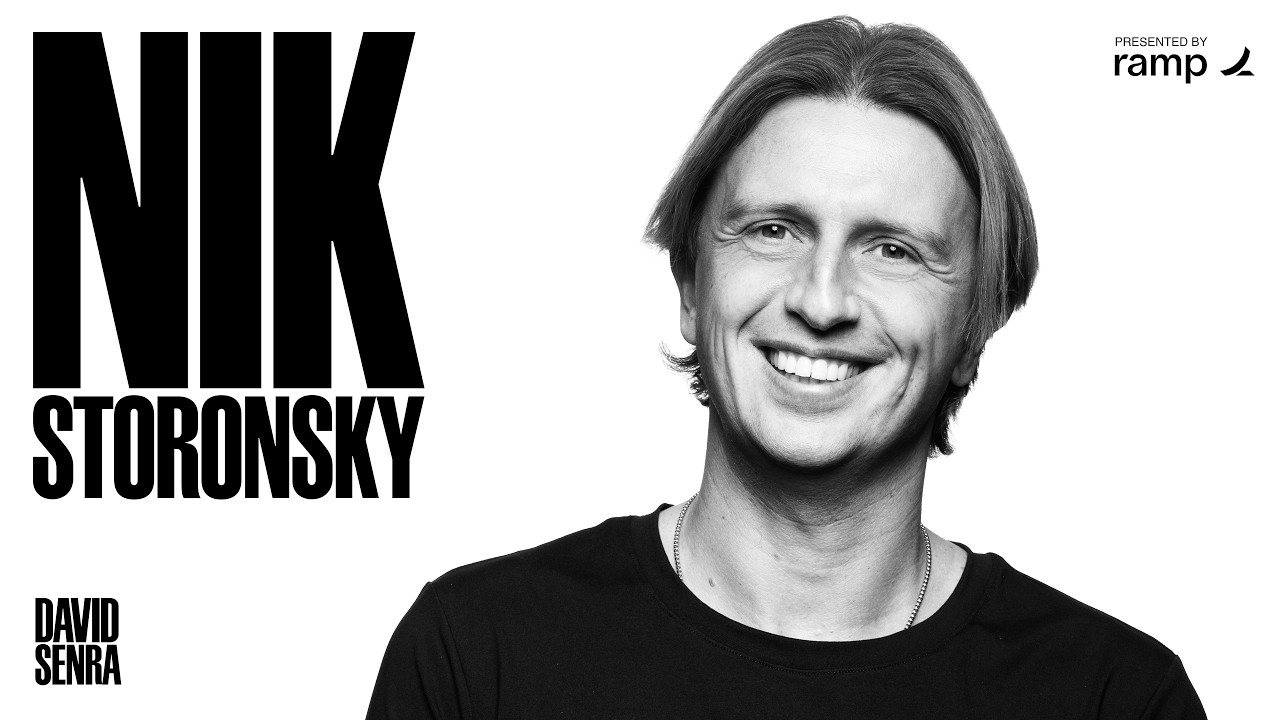
Recorded 25 October 2026 · 67 min
Nik Storonsky, founder of Revolut, argues that incumbent banks are vulnerable because they are run by professional CEOs who protect their jobs rather than build products. A founder who treats himself and the company as one entity can play offense. Revolut, live in about 38 countries, wants to be the number one bank in at least 100. The conversation matters because Storonsky turns that thesis into an operating system: algorithmic culling of product bets, KPIs instead of politics, and AI-shrunk teams.
The tension is between a coherent mechanism and thin external evidence. His claims about executives, venture investors and American startups come mainly from his own experience, and several rest on survivorship-style reasoning. He is also candid about costly early mistakes, notably choosing a lighter license that led to a 5-year wait for a UK banking license. Whether his intensity and system scale to a global bank remains open.
Competing against non-founders — ▶ 6:18
Storonsky says he does not watch competitors; he asks how he would beat himself, and aims to operate at nearly 100% every day. He sees incumbent bank executives as professional managers who last 3-4 years, collect bonuses and play defense. Their incentive is protecting their jobs, so they avoid risks like migrating a legacy core banking system, and they lack the technical skill to build products. A founder sees company and self as one entity. He tells regulators this makes him less likely to take excessive risk, because he alone is motivated to ensure survival.
The license shortcut backfired — ▶ 9:00
Revolut chose e-money and payment licenses because they could be obtained within 1 year, versus 3-4 years for a banking license. When it applied at 7-8 million customers, regulators saw far more risk than they would in an applicant with none, and the UK license took almost 5 years. Storonsky now calls a banking license a must for winning trust and salary deposits. He says Chime and Cash App will stay niche without one. His benchmark: Ireland at 80% penetration, against about 20% in the UK and France, though he attributes Ireland partly to weak banks.
Building the machine around bottlenecks — ▶ 17:21
Storonsky describes the company as a machine he continually adjusts. When teams of 10-30 people slowed as they grew, he created many small independent teams on a shared platform. When regulation bottlenecked growth, he built a regulatory and government affairs function. When hiring lagged, he built recruitment processes. His trading background contributes risk management and quantification: metrics and KPIs, he argues, kill politics because results become objective. He says the banks he worked in lacked this and ran on politics and intuition, which he considers often wrong.
Algorithmic culling of bets — ▶ 20:32
Product bets get a funded team of up to 10 people, who have 9-18 months to build and launch. Performance is judged on gross profit growth. After roughly 50 bets over 10 years, Storonsky says the top 10 grow 10-20% month on month and produce 1-3 million in monthly gross profit each. Bets in the bottom 25% of the historical cohort are sunset; winners get more teams until they become departments and P&L lines. He says he distrusts his own product intuition because he has often been wrong, and favors a fully algorithmic approach.
AI shrinks the team — ▶ 23:32
Storonsky is rethinking the 10-person team because one AI-assisted developer can span front-end, back-end and data science; he now thinks 2-3 people at best. About 90% of customer support is automated, from over 5,000 people before to far fewer now, and engineer speed is up 30%. One design team prompts an LLM with the code-level design system and gets live interfaces 3-4 times faster than building Figma frames, and he is pushing it company-wide. The stated goal is a full-stack AI employee with email, Slack and back-office access.
Self-guided missiles and pruning — ▶ 30:04
Storonsky sorts people by how much management time they consume: self-guided people set and reach their own goals, good ones need only a goal, average ones need weekly iteration, and below-average ones miss targets anyway. To sustain 50-52 direct reports, he minimizes management time per person, fires average performers, and eliminates managers who merely relay information. He says many good executives struggle to do this because they prioritize empathy over winning. For him, likability is never the goal for executives, though a tough executive may still be likable.
Constraint as training — ▶ 33:35
Storonsky argues that abundant US venture money leads founders to solve problems with spending, such as hiring an expensive VP of sales instead of building a cheap, repeatable sales system. Revolut instead faced capped interchange, limited credit, country-by-country banking setup and strict European employment law. Gross margin was negative for 3-5 years before reaching up to 80%. He claims this forced optimization on every problem and would make it a formidable competitor elsewhere. His evidence on work ethic is anecdotal: of 140 coworking-space companies, 3 survived 5 years and 2 survived 10, all working weekends.
Investors as cheerleaders — ▶ 42:05
Storonsky says early European investors used liquidation preferences, board seats and reduced founder voting rights, yet had rarely built companies. Their advice, he says, was sometimes wrong. They urged him to hire experienced executives, but of 50-plus hired in his first five years he kept only 2 beyond a year. He cites negative selection: top performers are already running companies or retired. He now removes VC board seats at each round and wants operators instead. His advice to founders: negotiate shareholder agreements so investors are purely financial players with no voting rights.
Quantum Light replaces VC judgment — ▶ 49:34
Born from a fight with an investor who came in at a 33 billion valuation, Quantum Light selects 30-40 companies over 2-3 years using machine learning models and invests equal amounts in each. Its first, 250 million founder Series B fund is fully invested at 56% IRR, by Storonsky's account. A 500 million Series C fund is underway. One signal: avoid investments where backing partners are older than 40, favoring 30-40. He also offers playbooks and Revolut's buying power. He aims to build something like BlackRock for private markets; the transcript does not say whether returns are realized.
Arbitraging impressions for trust — ▶ 54:39
After 7 years of organic growth, and a COVID-era revenue drop of about 70% for the travel-linked business, Storonsky hired marketers from gaming companies because they spend the most on marketing, over 1 billion at the top, and must do so cautiously. His banking thesis is that a branchless bank is trusted less than HSBC or JP Morgan Chase. So physical impressions, bought at lower prices than digital ones, build trust cheaply. Revolut now has ads in about 50% of European airports and has opened a Barcelona store modeled on an Apple Store.
One ledger funds moonshots — ▶ 1:01:12
Banks that expanded by acquisition run many systems and take months to extract data. Revolut runs one ledger across countries, so entering a market is largely configuration of onboarding and products. That lowers headcount and cost, creating scale economies and lets institutional knowledge transfer. Storonsky wants the resulting cash flow to fund capital-hungry bets outside finance, possibly including data centers. One precursor is Pragma, a transformer trained on transactions rather than words, drawing on about 30 million daily transactions, with potential uses in fraud, credit and investment. He says moonshots are in his head only for now.
Nik Storonsky's thesis is that banking's weakness is organizational, not technological or financial. In his telling, most incumbent chiefs are professional managers who stay 3-4 years, collect bonuses and play defense. A founder, by contrast, treats company and self as one entity. That difference changes decisions in concrete ways. Migrating a legacy core banking system is a risk with no personal reward for a manager, so the default is to do nothing. For a founder, standing still is the larger risk. Revolut began as a card for spending abroad at interbank rates and now offers credit, wealth, trading, crypto and business accounts in about 38 countries. Storonsky wants it to be number one in at least 100.
His most candid admission is that this speed cost him. Revolut took e-money and payment licenses because they could be had within 1 year, against 3-4 years for a banking license. By the time it applied for the latter, it had 7-8 million customers, and the UK process took almost 5 years. A regulator, he reasons, bears the blame if a large licensee fails. His conclusion is that a license is a must to earn salary deposits and wealth, and that Chime and Cash App will stay niche without one. The evidence is Ireland, at 80% penetration, against roughly 20% in the UK and France. He concedes Ireland has unusually weak banks and a small market.
Once past that mistake, he runs the company as a machine to be tuned at its bottlenecks. When growth slowed teams, he created many small independent teams on a shared platform. When regulation constrained expansion, he built a regulatory affairs function. When hiring lagged, he built recruitment machinery. The organizing principle comes from his trading career: quantify everything, because in organizations that run on intuition, politics fills the gap left by missing metrics. Objective numbers, he argues, remove the ability to argue your way out of a missed goal.
The product bet system is that principle in its purest form. A bet gets a team of up to 10 people and 9-18 months. It is judged on gross profit growth. From roughly 50 bets over 10 years, Storonsky says the top 10 grow 10-20% a month and generate 1-3 million in monthly gross profit each, while bets landing in the bottom 25% of the historical cohort are sunset. Winners receive more teams until they become P&L lines. Notably, he applies the algorithm to himself, saying he distrusts his own product intuition because he has often been wrong.
AI is now forcing him to revisit the unit of organization itself. He says the 10-person team was optimized around human strengths and weaknesses, and that one developer assisted by AI can now cover front-end, back-end and data science, implying teams of 2-3. About 90% of customer support is automated, down from over 5,000 people, and engineers are 30% faster. His distinctive management claim is that his main contribution is spotting a local innovation, such as a design team prompting LLMs with the code-level design system to produce live interfaces 3-4 times faster than Figma frames, and standardizing it across the company.
People policy follows the same logic of minimizing management overhead. Storonsky sorts employees by how much supervision they need, from self-guided to below average, and prefers the self-guided type. He holds 50-52 direct reports, removes managers who only relay information, and fires average performers. Many good executives struggle to do this, he says, because they prize empathy over winning. He pairs it with a belief in hardship. Revolut survived negative gross margin for 3-5 years and a regulatory environment of capped interchange and country-by-country banking, ultimately reaching up to 80% gross margin. He believes abundant US capital lets founders skip that education by spending money instead.
The same skepticism of unearned authority shapes his view of venture capital. Early investors, he says, wielded board seats and liquidation preferences without having run companies. His own test case was executive hiring: of 50-plus experienced executives brought on in the first five years, he kept 2 beyond a year. He explains the failures through negative selection, since the best people are already running businesses. His response was to remove VC board seats at each round and, after a dispute with an investor who had come in at a 33 billion valuation, to build Quantum Light. It picks 30-40 companies by machine learning model and invests equal sums, producing a reported 56% IRR on a 250 million first fund.
His marketing and platform strategy share one thread: using scale where incumbents cannot. Because a branchless bank is trusted less than HSBC or JP Morgan Chase, Revolut buys physical impressions, which he finds cheaper than digital ones, covering about 50% of European airports and opening a Barcelona store. A single ledger configured country by country, rather than acquired local systems, lowers the cost of entry and the headcount per market. He wants the resulting cash flow to fund capital-intensive bets, perhaps including data centers, building on Pragma, a transformer trained on transactions, which draws on about 30 million transactions a day.
The weakest links in this chain are evidentiary. Much of the case rests on Storonsky's own experience: that bank executives are bonus-collecting defenders, that most VCs are harmful, that US startups are not very competitive. His survival statistic about weekend work comes from one coworking space and cannot isolate cause. The fund's IRR is a reported figure for a model whose outcomes the transcript does not describe as realized. There is also a tension inside his philosophy. He distrusts intuition in product decisions, yet relies on judgment calls when firing average performers or setting an age cutoff for investing partners. The unresolved question is whether the engine is the system or the founder pulling the levers, and the moment of truth is whether the machine can run in 100 countries without him at the center.
The open question. Storonsky says he does not trust his own intuition on products and replaces it with algorithms, yet his hiring, firing and investor heuristics lean heavily on personal judgment and anecdote. The transcript gives no independent evidence on how much of Revolut's performance comes from his system and how much from his personal intensity. Nor does it say whether the 56% IRR on his first fund has been realized. Can a model that depends on 100% founder alignment survive expansion to 100 countries?
Watch the full video at https://www.youtube.com/watch?v=hT_MAAwFLIc.
Comments ()