
Recorded 16 August 2026 · 109 min
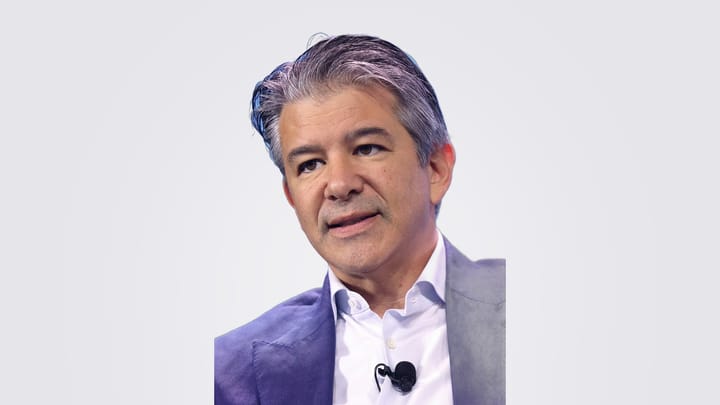
Travis Kalanick's bet at Adams is that physical AI will be won by specialized machines inside industrial real estate, not by humanoids. His stated limit is not technology but management capacity: a company can only create problems as fast as it can solve them. He applies the same rule to robots that make 1,000 pancakes an hour, autonomous mining trucks over 2 million pounds, and the courier drop that turns a $15 bowl into a $30 one.
The host, who runs the Founders podcast, pulls most of the conversation back through Uber. Kalanick covers the subsidy war with Didi in China, the taxi cartel in New York, a Benchmark-led war room in 2017, and his five-room fundraising auction. The tension throughout is that the intensity that built Uber also ended his run there. He says he ran a $70 billion company like a man afraid of starving, and now wants fierceness with calm.
The meta problem — ▶ 1:56
Problem solving per unit time must stay at or above problem creation per unit time, or "you're kind of effed." Problems are good, the way a math professor wants interesting ones, but a problem created today may not "come ashore" for 6 months or longer. So the real skill is predicting the nature of the problem and the management capacity needed to solve it. If the equation drifts out of balance, stop creating problems until solving catches up. Corollary: "the only constraint on our imagination is management capacity."
China means starting over — ▶ 5:11
Taking a business to China means starting from scratch. Even the GPS system differs, and that is one of roughly 100 differences, so you have to be excited by how different it is. Kalanick went in 2013 with a crew of Uber OGs, spent about a week and a half in an apartment meeting everyone, and was told it was the worst idea ever. His reaction: that's the best thing ever. Almost no Western entrepreneur has succeeded there; he and the host name Apple and Elon. His cultural value for this is "super pumped": infectious enthusiasm about hard things.
The people's Uber — ▶ 12:13
Uber Black in China was thin, so in 2014 Uber went to full peer-to-peer ride sharing, "the people's Uber," in red cars. Didi ran taxis, whose drivers treat app riders as second-class. Didi copied at speed, "almost an art form," yet Uber's growth went vertical: its top 10 cities by rides were Chinese, at $2-3 a ride versus $13-15 at home. Advisers said a local partner meant giving up 50%. Uber gave about 7% to a trusted partner, enough to be vouched for at ministerial level.
Progress needs stability — ▶ 18:09
In July 2015, with taxis burning in Paris during a pan-European strike, China's transport minister threw three Western newspapers on the table. Kalanick's reply: in a democracy a politician succeeds by being popular, so progress comes only when he is threatened with instability. In China, "Progress must be in harmony with stability." Any hint of instability and Uber would be shut down immediately, but a foundation of stability makes progress welcome. Cities mostly treated Uber fairly. He says he chose those three words because they sounded very Chinese.
Efficiency outstrips subsidy — ▶ 21:27
Subsidize rides to gain share, because share makes the network more efficient and the efficient player subsidizes less. The edge starts at signup and runs through pickup times and completion rates. A well-funded entrant one-tenth the size spends one-tenth as much, and efficiency may cut the incumbent's required outspend from 10x to 7x. To learn who is more efficient, let the rival reach 50% and see who holds share at a higher price. At 10 billion rides a year, $2 a ride is $20 billion. "Nobody's going to fund that."
Asymmetric counterattacks — ▶ 27:44
Scale cuts both ways. A big player can attack driver supply: $1,000 for joining and doing 100 trips in the first week forces the rival to raise pay across its whole driver pool to defend. Kalanick admits he is trying to recall such asymmetries 10 years on. The host's Rockefeller parallel is solder drops, 50 down to 49, saving $2,500 when small and far more at scale. Kalanick read Titan after Uber and found Rockefeller "way more hardcore." Uber never lobbied against a competitor or donated to a campaign.
The taxi cartel — ▶ 33:54
New York issued free licenses until roughly 13,000 existed, then holders lobbied to cap them, then to sell them as medallions, then to lease them. Two 12-hour shifts per car meant each driver paid $40,000 a year, so a license holder whose grandfather got it free collected $80,000. Kalanick calls it a "government condoned cartel" and says anti-competition is only legal if a regulator does it for you. He claims New York has since capped Uber drivers, adding a non-tradable medallion system, but concedes "I may have this wrong."
Excellence is taking pain — ▶ 46:44
The lifestyle of an entrepreneur rests on one pillar: "I can take more pain than the other guy and I'll prove it." The image is a marathoner at mile 21, who is not smiling because feeling pain is the extra push that wins. Herb Kelleher said of stress, "I don't handle it. I like it." The downside Kalanick names is getting so used to adversity that you stop being bothered by what is wrong, and there is power in being bothered. His target is fierceness on the outside with calm inside.
Benchmark's war room — ▶ 58:46
In 2017 Benchmark ran what he calls a war room, an unspoken activist investor creating a weekly crisis, apparently because it wanted liquidity. Uber was already preparing an IPO but he had not told them. Bill Gurley, a "catastrophist," urged taking the first term sheet at about $6 billion after the $3.5 billion round of August 2013. Kalanick refused: "I never get attached to a price. I get attached to a process." Two months later Uber raised at a $17.5 billion pre-money valuation.
Do no harm — ▶ 1:04:26
The operator is a chess grandmaster playing 60-80 hours a week, many moves ahead. The VC is an enthusiast checking in every 3 months and trying to leave a mark. Don't tell Jordan how to dunk. Investors also behave like lions on the Serengeti: a limping antelope gets taken down whether or not the lion is hungry. So the real bar is do no harm, which he puts at about 10% of VCs. Truly helpful investors are about 1%, since real help, like recruiting epic people, requires being in the game deeply.
QED, then the auction — ▶ 1:09:09
In normal markets, a 2-hour QED presentation, with numbers woven through the story, proves the winning formula. In a super cycle, with the future 3-5 years out and a possible 100x, no numbers can QED it, so cut to 45 minutes and argue the theory of the case. At peak Uber he ran five rooms in one week, split by check size from $250 million-plus down to $25 million. Bidders fill in how much they'd invest at each price, he plots the demand curve, drops those priced out, and repeats.
Starving at $70 billion — ▶ 1:20:30
A lawyer asked if he ever had chalk on his shoe. He never did, but proving it took "an electromagnetic scanning microscope." Big, important companies are expected to stay well back from the line. His first startup meant four years without salary and several near-death cash crunches, so precision was survival. "I was running a $70 billion company the way somebody who thought he was going to starve next week would run it." He also names his own errors: not telling investors about the IPO, not "kissing the ring," and having people he suspected inside the company when the coup came.
Specialized beats humanoid — ▶ 1:27:20
Making 1,000 pancakes an hour would take about 100 humanoids, versus one hot iron apparatus. Humanoids fit low-scale tasks in human spaces, like a home robot that folds clothes, takes out trash and washes dishes. Industrial scale needs purpose-built machines. His food thesis: a meal has a 30-minute half-life, so manufacturing and logistics must sit together, within 15 minutes of anyone. A $15 bowl becomes $30 because each courier drop costs about $12. That requires industrial real estate, robotic production and robotic couriers.
Land is the base — ▶ 1:33:09
Everything is grown, mined or manufactured, and moved. Physical AI's stack includes real estate, because a mine is real estate and super intelligence needs energy and minerals. "Land is the whole damn thing." Adams does not own mines; it makes them more productive. A gold-mine CEO would want 20% more gold a year, and lower opex opens more mines. Wheelbase autonomy is the ignition across mining, food and freight. One food supplier spends $3 billion a year on labor that moves pallets on forklifts.
Find the line — ▶ 1:42:45
A leader's job is to find the line between order and chaos, which is "innovation at speed and at scale." The approach is the fewest rules while staying out of chaos. At Uber, 23-year-olds launched cities under one rule: no launch until he said yes on the pricing call, which forces every regional question. Early cities took 8-10 hours of calls, London included. He never solved the same problem twice, and by city 20 the call took 5 minutes. At Adams he sets alignment upfront and accountability on the back end.
A company can only create problems as fast as it can solve them. Travis Kalanick writes it as an inequality: the rate of problem solving must stay at or above the rate of problem creation. Break it and you drown. The trap is the lag. A problem you create today may not come ashore for 6 months, sometimes longer, and by then its shape is not what you guessed. So the job is prediction twice over. What will the problem look like, and how much management capacity will exist to meet it? When the two drift apart, you stop creating until solving catches up. Nearly everything else in this conversation, from China to robots, is that rule applied.
Start with how it works inside a company. Kalanick's answer is the fewest rules that keep you out of chaos. Too much order brings bureaucracy. Too much chaos brings slowness. The line between them is "innovation at speed and at scale," and finding it is the leader's job. At Uber, 23-year-olds launched cities under a single rule: nothing launched until he said yes on the pricing call. Pricing was the choke point because it forces every question at once. What is the regulation? What car does it dictate? What are local wages? How long does it take to get across town? The first 20 cities took 8-10 hours of calls each. He never solved the same problem twice. By city 20 the call took 5 minutes and he stopped attending. The rule stayed, and his time moved to the problems nobody else was solving. Adams runs on the same logic: alignment upfront, accountability at the back end, and every leader deputized to be the problem solver in chief for their own area.
The same mindset shaped the war with Didi. It was a subsidy contest decided by efficiency. You spend to gain share, share makes the network more efficient, and the efficient player has to subsidize less. The edge starts at signup and runs through pickup times, completion rates and how well the driver app steers cars to demand. A well-funded entrant one-tenth the size spends one-tenth as much, so the incumbent must outspend it 10x, or 7x if efficiency helps. The hard part is knowing who is actually more efficient. Kalanick's test is to let the rival reach 50%. If you hold half the market at a higher price, you are the efficient one and can dial the spending down. The cap on subsidy does the rest. At 10 billion rides a year, $2 a ride is $20 billion, and "nobody's going to fund that." Scale also gives asymmetric weapons. A $1,000 bonus to a rival's drivers for 100 trips in a week forces that rival to raise pay across its whole pool.
Geography is the second constraint, and it bites harder. Taking Uber to China meant starting over: a different GPS system was one of roughly 100 differences. Almost no Western entrepreneur has made it work. Uber's answer was peer-to-peer ride sharing, "the people's Uber," against a Didi that ran taxis. Didi copied fast, but Uber's curve still went vertical, and its top 10 cities by rides were Chinese, at $2-3 a ride. Advisers said a local partner would take 50%. Uber gave about 7% to a partner trusted enough to vouch for it at ministerial level. Then came the price of that trust. The transport minister showed Kalanick Western newspapers full of burning taxis in Paris. His answer was that democracies get progress only under threat of instability, but in China "Progress must be in harmony with stability." Uber was treated fairly in most cities. Even so, the government eventually tilted. Sovereign wealth funds poured billions into Uber's competitors in other regions and took the war global.
The other regulatory story is the taxi cartel. New York gave away licenses until roughly 13,000 existed. Holders then lobbied to cap them, to sell them, and to lease them. Two 12-hour shifts per car meant each driver paid $40,000 a year, and the license holder, whose grandfather got it free, collected $80,000. Kalanick calls it a "government condoned cartel." His definition of anti-capitalism is any constraint on starting a business or choosing a supplier. By that test, he says, Uber is now being turned into a taxi system, with a cap on drivers and a medallion that can't be traded. That is his claim, and he hedges it: "I may have this wrong."
The same logic carries into robotics. Industrial scale needs machines built for the task. Making 1,000 pancakes an hour would take about 100 humanoids, versus a hot iron that pushes out 100 pancakes every few minutes. Humanoids belong where a home needs one machine to fold clothes, empty trash and wash dishes. Food is the first test. A meal has a 30-minute half-life, so production and logistics have to sit in the same place, within 15 minutes of anyone. Courier drops of about $12 each are why a $15 bowl becomes $30. The fix is three pieces together: industrial real estate, robotic production and robotic couriers. Then the thesis widens. Everything around us is grown, mined or manufactured, then moved. Super intelligence needs energy and minerals, and capturing either means land. "Land is the whole damn thing." Adams does not want to own mines, only to make them more productive. A gold-mine CEO wants 20% more gold a year, and cheaper operations open mines that were not worth working. Autonomy on wheels is the ignition across all of it, from mining trucks to freight. One food supplier alone spends $3 billion a year on labor that moves pallets on forklifts. One industry at a time is not modesty. It is the management-capacity rule applied to a company with a very large field.
The obvious objection is Uber itself. The intensity that scaled it also ended his run. Kalanick is frank about the cost. His model of excellence is the marathoner at mile 21, not smiling, with the line "I can take more pain than the other guy and I'll prove it." The risk he names is numbness, becoming so used to adversity that you stop being bothered by what is wrong. He wants fierceness with calm inside. The sharper admission is about running too close to the line. A lawyer asked if he ever had chalk on his shoe. He never did, but checking would take "an electromagnetic scanning microscope." Big companies are held to a higher standard. His own habits came from four years of no salary and repeated near-failure. By his account he ran a $70 billion company the way a man afraid of starving would run it.
Then there is the blame he spreads outward, and how much of it he keeps. Benchmark, he says, ran a war room in 2017. Bill Gurley, a catastrophist, wanted him to take the first term sheet at about $6 billion. Kalanick refused and ran a process instead. Two months later Uber raised at $17.5 billion pre-money. His lesson is to attach to a process, not a price. Run it as an auction. Collect bids at every price, build the demand curve, cut those priced out, and repeat. His view of VCs is blunt. The operator is a grandmaster playing 60-80 hours a week, the investor a chess enthusiast who checks in every 3 months, and the best bar is do no harm. He puts that at about 10% of VCs. But he also owns his part. He did not tell the investors about the IPO prep and did not "kiss the ring," and he had people inside the company he suspected when the coup came. He is also in a fundraise now, and he declines to say how he is running it.
What is unresolved is whether the same operator can be held by his own equation. The Adams plan has food, mining, freight and autonomy running at once, with no unit economics offered for any of them. Management capacity is meant to be the only limit on his imagination. At Uber, problems created in good faith came ashore faster than anyone could solve them. He says he now works in a third of the time and has outgrown the fear of failure. That is a claim about him, not evidence about the company.
The open question. Over 109 minutes the Adams thesis gets almost no numbers. Food at near-grocery prices needs industrial real estate, robotic production and robotic couriers to work at once, and no unit costs, timelines or deployments are offered. The management-capacity rule is also untested at this breadth: food, mining, freight and autonomy are all running in parallel. Kalanick admits that overextending past the line is what undid him at Uber. Watch for the first mining or food site that shows the economics of a gainfully employed robot, and for whether his own meta problem equation holds as the businesses multiply.
Watch the full video at https://www.youtube.com/watch?v=QVnU5lGlKE8.
Comments ()