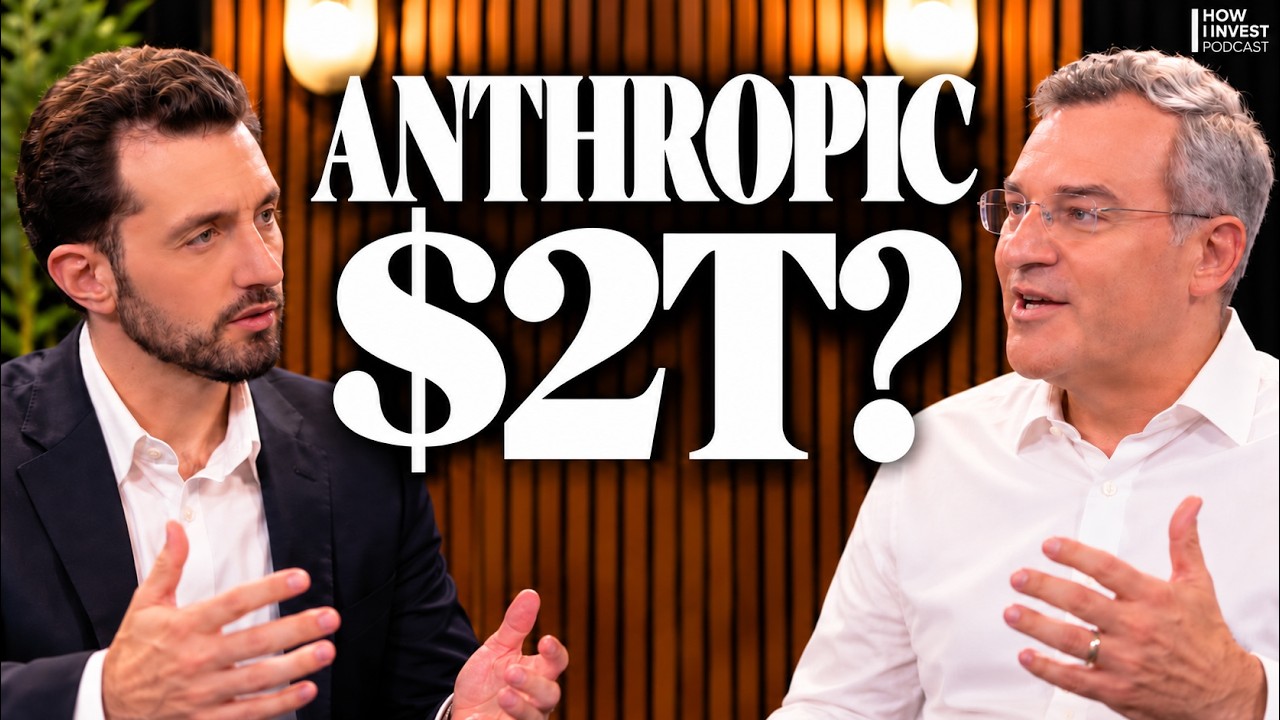
Recorded 26 October 2026 · 63 min
Matt, an investor at Bain Capital Ventures, argues that venture's core logic undermines itself. The companies that become enormous look overvalued at every round, so rational investors grow price-insensitive. When everyone does this, prices ratchet up by roughly 50% a cycle and a bubble forms. He applies the lens to AI, where he assumes superintelligence is inevitable within one to three years, and to the reported $2 trillion Anthropic valuation, which he calls reasonable.
The tension is that Matt cannot say whether AI is a bubble. If it behaves like earlier technology waves, he says, it is the eighth inning. Whether valuations hold depends on something nobody can observe yet: whether 2027 frontier models deliver another leap in functionality comparable to the shift from chatbots to agents. The conversation tests how an investor can act sensibly on that uncertainty.
Valuation sensitivity, not timidity — ▶ 2:15
Bain Capital Ventures is perennially top quartile but, as the host puts it, lacks power-law outcomes. Matt attributes this less to avoiding outlandish ideas, citing Crusoe, which began mining Bitcoin at oil heads in Arctic Canada, than to refusing to pay market price when it ran high. He assumes risk-management habits from Bain Capital's credit and private equity businesses seeped in unconsciously. His argument is that Databricks, Stripe and Ramp were overvalued at every round, so turning down overvaluation systematically misses power-law companies. He also says unrealized positions like Crusoe will return multiples of a fund.
How the 50% premium compounds — ▶ 5:44
If the best deals are always about 50% too expensive, a partner holding a 20x-revenue AI application company may reason that anything under 30x cannot be a power-law winner. No committee writes this down, Matt says, but price becomes a proxy for quality. The host cites an Early Bird study finding that overvaluation versus comps persists round to round, and notes that backing a likely 75x winner beats a rival with a theoretical 100x. Matt accepts this for any single investor. Aggregated, every price rises 50% and the next round starts higher. Feeling suspicion toward a bargain signals prices will trend up.
Consensus market, dynamic leadership — ▶ 8:47
Matt agrees with Marc Andreessen that today's market is consensus-driven: a leader is anointed, often alongside a second, and funds pay almost anything to be in one of those two. He contrasts it with 2021, when firms did two unicorn deals a week across a broad field. He rejects the claim that there are no more diamonds in the rough. His evidence is Legora, which looked like a European upstart against Harvey at the time of investment and now leads in some segments, plus similar reshuffling in financial analysis. The example is a company he and the host both back.
Stipulating AGI, then investing — ▶ 12:06
Matt's firm assumes AGI is here or will be, and asks what wins under abundant superintelligence. He says that view, shared by most venture firms, expects superintelligence to be inevitable within one to three years, though not comprehensively imminent. Two themes explain about 75% of investing over the past 18 months. Robotics is roughly a third of activity. The other is AI-native services, about 20 investments since late 2022, where a startup does the work itself. The first, Reserve, an insurance-claims company, is on track for well over $100 million in revenue in its second full year. The firm takes no common stock when incubating.
Lab incentives as a moat — ▶ 18:19
Matt argues the labs are unlikely to launch law firms or insurers because OpenAI and Anthropic earn fast-growing revenue from those industries' corporates. He calls this probabilistic and speculative. His precedents come from fintech. Google earns 20-30% of revenue from financial services advertising and repeatedly launched and shut finance products. Amazon shelved consumer-finance plans once AWS counted financial services as a core customer. Apple, which does not rely on that industry, issued a credit card. He says the labs competing directly would be far down the path and may never happen.
Compute is the battlefield — ▶ 26:07
Matt calls differential access to compute perhaps the prime battlefield of the next 5 years, whereas talent and leadership defined the last 5. His reasoning is that the contest becomes mechanical: whoever has the compute to train the best model fastest gains compounding advantage. He separates this from the services question, conceding that limited compute could constrain labs from starting a law firm, though he doubts that is the reason they won't. Of OpenAI, Anthropic and Elon Musk, he gives Musk the advantage in data-center building and in attracting capital to vast projects.
OpenAI's open-architecture Codex move — ▶ 29:58
Matt considers OpenAI's decision to let Codex users run open-weight model tokens alongside OpenAI's own an underreported strategic move, a departure from model providers cutting off Cursor. He likens it to Microsoft's open-architecture OS, where WordPerfect and Lotus 1-2-3 could run but share drifted to Word, Excel and PowerPoint because Microsoft owned the platform. He expects OpenAI still to sell many tokens into Codex. He dismisses a Valley rumor that both labs will cut API access to vertical apps as a bad business decision, since API revenue is their biggest business.
Anthropic's valuation and weak hands — ▶ 33:16
Matt calls the reported $2 trillion Anthropic valuation reasonable against reported revenue and growth: take three zeros off and it makes sense, and sustained growth lets the company grow into it. His concern is supply and demand when lockups expire. In a flagged, purely speculative illustration, if half the cap table sought liquidity within 2 years of an IPO, replacing it would need roughly another $1 trillion. He favors tranched unlocks and price-target ladders, which he used in a 2021 IPO, noting that Cerebras and SpaceX tranched, though underwriters, who bear legal risk, resist novelty.
Capability decides the $2 trillion — ▶ 40:01
Matt agrees that revenue is concentrated among developers and extends the point: with agents as users, the base is not 8 billion humans but potentially 80 or 800 billion entities. Cheaper open-weight and older models cut the other way. His resolution is that they cover today's tasks, while tomorrow's tasks define the frontier. If 2027 models improve on 2026 as much as 2026 did on 2025, $2 trillion is a starting point; if progress has plateaued, it is too high. He cites Claude's answer, which he hedges with its Anthropic provenance, that the roughly $5 trillion in capex funds new capabilities more than wider access.
What Hertz can now build — ▶ 45:06
Answering the claim that old models suffice, Matt reframes the question for companies like Hertz and Avis. The question is not how to run the business better, but what they can now do. Hertz holds accident, repair-cost and driver data, so launching its own insurance subsidiary rather than partnering with AXA becomes plausible. Filing reports with insurance commissioners in 50 states and another 30 countries becomes trivially easy with AI. He says this requires talented management that relaxes historical constraints, and notes private equity and venture are interacting around the idea.
Eighth inning, but nobody knows — ▶ 53:05
Matt says nobody knows the inning. If AI resembles earlier waves, it is the eighth, and one misstep could end it. SaaS ran from roughly 2012-2013 to November 2021, followed by 18 excruciating months. He sees the bubble risk more in investing than in adoption, putting the chance of depressed returns for this vintage above 10%. A single winner at 25% of an Anthropic could still rescue a portfolio of overpaid companies. His discipline is pacing: investing $500 million a year regardless, mindful that the industry tripled its pace between 2020 and 2021.
Venture capital has a pricing problem its practitioners rarely state plainly: the companies that become enormous look overvalued at every round. Matt cites Databricks, Stripe and Ramp. His conclusion is that an investor who refuses to pay up for apparent overvaluation will, on average, systematically miss the power-law companies. He applies this to Bain Capital Ventures itself. The host notes the firm is perennially top quartile but lacks power-law outcomes. Matt says unrealized positions such as Crusoe, where the firm led the pre-seed and seed, will return multiples of a fund. His diagnosis is not an aversion to outlandish ideas but valuation sensitivity, which he assumes seeped in from Bain Capital's credit and private equity risk culture.
The same logic explains how bubbles form. Matt describes a mindset no committee would write down: if a typical application-layer AI company trades at 20x revenue, a pattern-matching partner concludes that anything below 30x cannot be a power-law company. Price becomes a proxy for quality, so higher looks better. The host adds that an Early Bird study found overvaluation versus comps persists, and that paying for the likelier winner beats a cheaper team with a theoretical 100x when the favorite would deliver 75x. Matt accepts the arithmetic for any single investor. The trouble is aggregation. If everyone believes they hold the winner, every price rises about 50%, and the next round starts from the higher base.
Matt does not dispute that the market is consensus-driven. A leader is anointed, often with a second, and funds that pay almost anything for those positions refuse everything outside the winner's circle. He contrasts this with 2021, when breadth was the feature and firms were doing two unicorn deals a week. Where he parts company with Marc Andreessen, who holds there are no more diamonds in the rough, is on dynamics. Legora, backed by both Matt's firm and the host, looked like an upstart against Harvey at the time. Matt says it now leads in some segments and has a case for second-mover advantage. The caveat is that his flagship example is a portfolio company.
Matt's operating premise is to stipulate that AGI is here or will be, then ask what wins under abundant superintelligence. He says most venture firms share the view that superintelligence is inevitable within one to three years, though not comprehensively imminent. Two themes formed about 18 months ago and explain about 75% of recent investing. Robotics is roughly a third of activity. The other is AI-native services, where a startup does the work rather than selling software to the industry. The fear driving it is that foundation labs will be pushed into application-layer functionality. Reserve, an insurance-claims company incubated without the firm taking common stock, is on track for well over $100 million in revenue in its second full year.
Why would a lab not simply compete with its own customers? Matt's answer is an inference from incentives, which he flags as speculation. OpenAI and Anthropic earn a large and fast-growing share of revenue from corporates, so he expects them to hesitate before starting law firms or competing with insurers like Travelers. His precedents come from fintech. Google earns 20-30% of revenue from financial services advertising and has repeatedly launched and shut finance products. Amazon shelved consumer-finance plans once AWS counted financial services as a core customer. Apple, less dependent on that industry, issued a credit card. The argument is by analogy, and Matt concedes the labs have the theoretical ability to do anything.
Compute adds a separate constraint. Matt calls differential access to it perhaps the prime battlefield of the next 5 years, whereas talent and leadership separated the field over the last 5. If so, the contest becomes mechanical: whoever trains the best model fastest compounds the advantage. He gives Elon Musk the edge in data-center building. He also admires OpenAI's decision to let Codex users run open-weight models alongside its own, comparing it to Microsoft's open-architecture OS, on which share still migrated to Word, Excel and PowerPoint. He dismisses a rumor that both labs will cut API access to vertical apps as bad business, since APIs are their biggest businesses.
On Anthropic's reported $2 trillion IPO valuation, Matt says the underlying revenue and growth make the number reasonable: remove three zeros and it looks sensible. His worry is technical, namely how much of the cap table sits in weak hands. He offers a speculative illustration, which he disclaims as having no basis in intuition. If half the owners wanted liquidity within 2 years of an IPO, replacing them would require sourcing roughly another $1 trillion. The host calls the standard 6-month unlock the dumbest model he has heard. Matt agrees that tranches and price-target ladders reduce drawdown risk, but notes that underwriters, who carry the legal exposure, resist novelty.
The larger variable is capability. Matt agrees with Coatue's Lucas Swisher, relayed by the host, that revenue is concentrated among developers and penetration is tiny. He amplifies it: with agents as users, the base is not 8 billion people but 80 or 800 billion entities. Open-weight and older models cut the other way, and his resolution is that they will serve yesterday's tasks while tomorrow's tasks define the frontier. If 2027 models improve on 2026 as 2026 did on 2025, he says, $2 trillion is a starting point. If progress has plateaued, it is too high. His corroboration is thin: Claude's answer that roughly $5 trillion of capex funds new capabilities more than wider access, an answer he notes carried its own disclaimer about Anthropic's influence.
The capability argument also reframes the old-economy question. Asked about companies like Hertz and Avis, Matt says the wrong question is how they can run their businesses better. The right one is what they can now do. Hertz holds comprehensive data on accidents, repair costs and drivers, which makes launching its own insurance subsidiary, rather than partnering with AXA, plausible. Regulatory filings in 50 states and another 30 countries become, in his words, trivially easy with AI. This is optimism conditional on talented management relaxing historical constraints. Matt offers no evidence yet that incumbents are doing so, only that the economics of attempting it have changed.
Asked which inning the AI bubble occupies, Matt declines to give odds and says nobody knows. If AI resembles earlier waves, he says, it is the eighth inning. SaaS ran from roughly 2012-2013 to November 2021, helped by COVID and falling rates, and was followed by 18 excruciating months. If AI is another SaaS chapter, the top may not arrive in November 2026, but is months and quarters away. He locates the risk in investing rather than adoption, putting the chance that this vintage's venture returns are depressed above 10%. One winner worth 25% of an Anthropic could still redeem 49 overpaid bets. His response is behavioral: invest $500 million a year regardless, mindful that the industry tripled its pace between 2020 and 2021.
The framework leaves one variable doing most of the work: whether frontier models deliver another leap of the chatbot-to-agent kind. Matt is candid that he does not know. His comfort with $2 trillion, his dismissal of open-weight substitution and his view of capex all depend on it. An editorial inference suggests a tension he does not address. He describes confidence in the winner as the engine of bubbles, yet his firm's premise is to stipulate superintelligence in every investment. If that premise is itself now consensus, pacing guards against mistiming the thesis without guarding against being wrong about it.
The open question. Will the next generation of frontier models deliver a functionality leap comparable to the shift from chatbots to agents? Matt's comfort with a $2 trillion Anthropic valuation, his view that open-weight models are only a substitute for yesterday's tasks, and his reading of $5 trillion in capex all hinge on it. He offers only the 2025-to-2026 trajectory as support and says he does not know when, or whether, the next leap arrives.
Watch the full video at https://www.youtube.com/watch?v=K2OC5yKrbaM.
Comments ()