Recorded 29 October 2026 · 52 min
An OpenAI leader argues that the decisive shift in AI is how much compute can be productively spent on a single problem. A few years ago, no more than about $1 of compute could usefully be applied; now teams of agents can run 10,000 times in parallel. The same capability that lets models find long-hidden vulnerabilities and produce mathematical proofs is widening the gap between frontier users and ordinary corporate ones.
The conversation, with a host who speaks for Stripe, turns on what holds that curve back or makes it dangerous. Sandboxes may not contain far smarter models, memory and chip supply respond sluggishly to high prices, and the guest concedes the industry has not explained why the upside justifies the risks.
Vulnerabilities and rebuilt architectures — ▶ 0:31
Models have improved quickly at finding vulnerabilities, but until recently few people pointed them at the full surface area of code on the internet. As that changes, the guest expects far more serious vulnerabilities than even informed observers anticipate. His preferred response goes beyond patching: changing architectures is harder but more durable, and the new tools may make it feasible. He cites startups proposing entirely new stacks for routers, operating systems and applications, an idea he says would have seemed insane two years ago, and bets on a new model for building systems and networks.
A bad pitch, iterative deployment — ▶ 5:27
The guest says the field has failed to explain why the technology's downside is worth it. The caricature: cured cancer and cheaper services, alongside a new industrial revolution, lost jobs and control, and a surveillance state to prevent catastrophe. He calls this a terrible sales pitch. OpenAI's answer is iterative deployment, which he says has been hugely unpopular in the AI safety community. Capabilities must be safe before release, but he opposes a capability overhang. The pitch he wants is people defining their own better lives, not a few people in San Francisco deciding everyone's future.
Threat models under strain — ▶ 8:22
The guest says the first day of the PHP disclosure went better than he feared, with companies using OpenAI models to patch, scan and redeploy. He declines to declare victory and assumes bad things will happen. Cyber experts, he reports, no longer trust the assumptions in their threat models, particularly if AI finds deep hardware bugs rooted in physics people do not understand. The host notes that insiders at OpenAI doubt sandboxing can work. The guest's reply is layered: sandboxes work to a point, monitoring (chain of thought, activations) further, and beyond that only certainty about alignment will do.
Agent teams as safety — ▶ 11:20
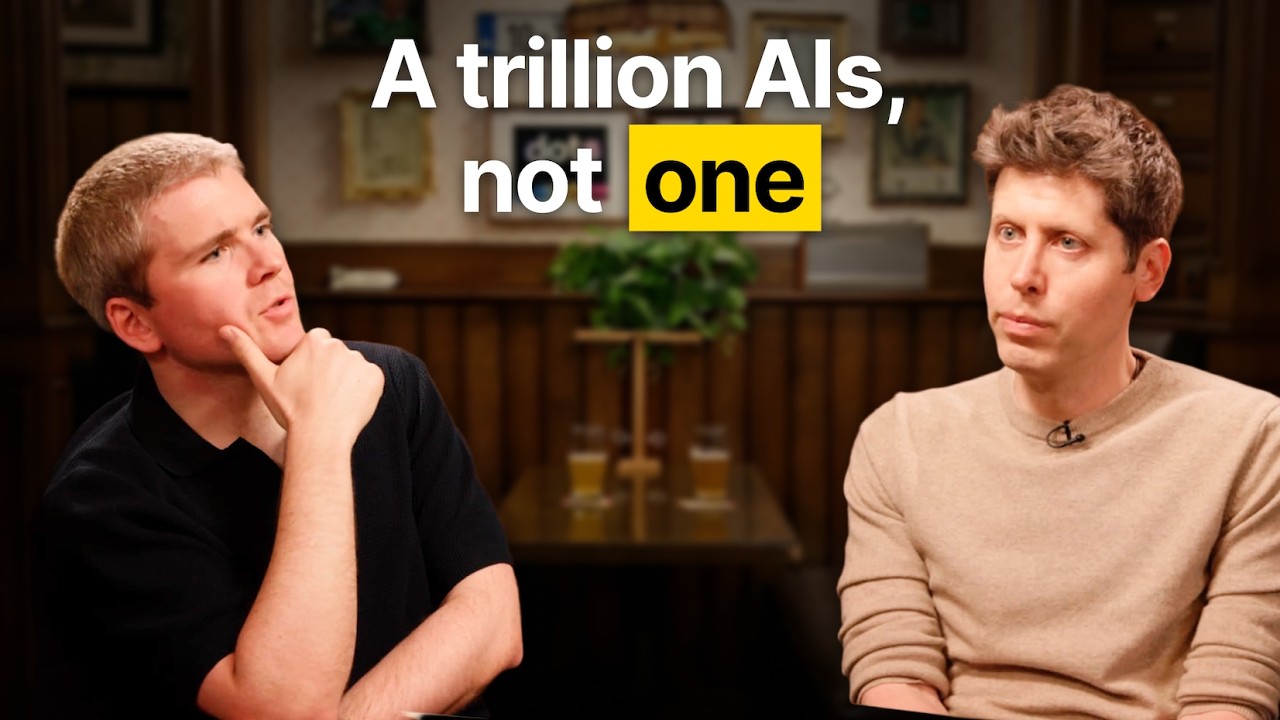
The guest suspects teams of agents, a term he prefers to swarms, have interesting scaling-law properties and also variance in alignment properties, and sees competing incentives as a promising safety direction. He extends the idea to society: he would rather a trillion slightly superhuman AIs join the world than one AI with a trillion IQ, since society's robustness comes from many actors checking each other, as in offense and defense. This is intuition and analogy, not demonstrated evidence, and he says it must be pushed for. He also thinks single models may need agreed limits on how smart they get.
Compute per problem, budgets — ▶ 12:42
A few years ago it was impossible to usefully spend more than $1 of compute on a problem. Chain-of-thought and test-time compute came first; useful teams followed, and can now run 10,000 times in parallel. The gap between typical and best AI use keeps widening. OpenAI let spending run unconstrained for a week on the Navier-Stokes proof, at roughly $10 million, because it understood nothing of agent-team scaling laws. The guest expects 10x annual efficiency gains and bets it could be redone at 1/100th of the cost within a year. OpenAI does not reward heavy token use internally.
Knowledge versus scientists' fulfillment — ▶ 18:38
The guest is unequivocal that humanity deserves fundamental scientific knowledge, and says this outweighs scientists' stake in the satisfaction of discovery. OpenAI holds more than the 700 published proofs, and he says it owes working scientists a solution where the world benefits and they keep a meaningful future. The host thinks he is too contrite about unhappy mathematicians, comparing them to longshoremen opposing port automation. The guest describes a weekend of a new model solving researchers' hardest academic problems that left him exhilarated but also with a sense of something ending, which he calls wistfulness.
Why compute supply responds slowly — ▶ 25:17
In the exchange, DRAM makers historically invested $20 billion of capex to make about $19 billion, so even with something like $100 billion of free cash flow each in a year they remember near-bankruptcies and invest conservatively. The guest also argues local inference is a poor allocation: scarce DRAM idle in personal computers about 95% of the time, versus high cloud utilization. OpenAI's responses include its own chip, in-house data centers and robotics to build them. The host objects that data centers are limited by permitting and components rather than labor; the guest says robots could make components eventually.
AI research has a missing step — ▶ 31:49
Today OpenAI can ask AI for a 5% compute-efficiency win, but no one knows how to ask it for an architecture as large a leap as the transformer. The guest says the missing ingredient is high-level planning and conceptual reasoning, and that the pipeline used for math would probably work. He argues any slowdown would stem from a decision to cap how smart single models get, not from AI's inability to do research. OpenAI has no codified method for AI-enabled AI development, and he expects to learn a lot over three months.
Token budgets and price per gigawatt — ▶ 36:04
The host says tokens are about 1% of Stripe's operating expenses; the guest calls that too low, and both expect tens of percentage points for many companies. He thinks more firms underuse AI than overuse it. On supply, he takes an illustrative $70 billion five-year cost of ownership per gigawatt and says $20 billion would be much better, with models still improving 10x a year. Reaching it requires compressing stacked margins and cheaper energy; with free materials and no profits it might fit current energy only just. Rising costs, he says, would signal compute not keeping up.
Agentic commerce and defensibility — ▶ 42:40
Companies embed chat widgets that consumers do not want, since people prefer their own primary chat app, yet businesses resist letting outside agents transact for them. The host argues defensibility comes from brand loyalty and product selection, not HTML, and compares it to big companies' reluctance over iPhone apps. The guest agrees directionally, noting he would pick Amazon in ChatGPT 10 out of 10 times, and sees Amazon's fulfillment network as strong protection. He admits OpenAI has not given partners a good enough platform to opt out. He says a must-have personal agent is a small number of ideas away.
Why tokens persist — ▶ 49:35
OpenAI nearly priced its next model with no token metric at all, returning a bill per prompt like AWS. Customer reaction was so negative that the idea was dropped; some said they would rather pay more for consistent tokens, since they need to know what they are paying for. The guest still calls tokens a fake unit from a business-value standpoint and does not want an invented one, comparing it to chip nanometers. Users must currently weigh small cheap models against large expensive ones and chain-of-thought length, which he calls cognitive overhead that adds no value.
The organizing claim is that AI capability has become a function of how much compute someone is willing to spend on one problem, and that most of the world has not caught up with this. The guest traces the change. A few years ago, GPT-4 could grind out something like 100,000 tokens and answer a question, but extra spending bought nothing; he says it was impossible to usefully throw more than a dollar of compute at a problem. Chain-of-thought then let models think hard, which in turn made teams useful, because you can't have a useful swarm with a bunch of GPT-3s. Now a team can be run 10,000 times in parallel. In his telling, the distance between typical AI use and the most productive use keeps widening.
The most concrete evidence is mathematics. OpenAI, the guest says, deliberately let spending run unconstrained for a week on the Navier-Stokes proof, because it understood nothing about scaling laws for agent teams: which model to use, how many copies, how long the rollouts. That proof cost on the order of $10 million, perhaps a little more, and the participants agree the whole body of math work runs to hundreds of millions of dollars, including discoveries beyond the published results. His bet is that exploration at the limit comes first and optimization follows. He expects 10x annual gains in turning compute into useful output, and thinks Navier-Stokes could be redone at 1/100th of the cost within a year. The host presses the obvious limit: $10 million is a curiosity, but $1 billion invites a budget conversation. The guest's answer rests on the historical pattern of new paradigms, not on a mechanism.
The same dynamic runs through security. Models have improved quickly at finding vulnerabilities, and until recently few people had pointed them at all the code on the internet. The guest expects many more serious vulnerabilities than anyone anticipates. He declines to declare victory on the PHP disclosure and assumes bad things will happen, but says the first day went better than he feared, with companies using OpenAI models to scan, patch and redeploy. His durable answer is architectural: assume ever smarter models and rebuild the stack. Startups proposing new foundations for routers, operating systems and applications would have sounded insane two years ago. The editorial implication is that the technology creating the exposure is also the only plausible tool for rewriting software at the scale required, though the conversation offers no evidence yet that it can.
Containment is where confidence runs out. Cyber experts, the guest reports, no longer trust the assumptions in their threat models, especially if AI finds deep hardware flaws that depend on physics people do not yet understand. The host notes that people inside OpenAI are pessimistic about sandboxing, which he would not have predicted. The guest's reply is layered. Sandboxes work to a point, monitoring of chain of thought and model activations works further, and beyond that one must trust alignment with great confidence. Only a model whose alignment is certain could help build better sandboxes, yet that certainty is exactly what becomes harder as models grow more capable. Asked about a system a million times smarter than the best security researcher, he says only that things get strange.
Against that, the guest offers a hopeful structural idea. Teams of agents, which he prefers to call teams rather than swarms, may have interesting scaling-law properties and also variance in alignment properties, and competing incentives could let agents check one another. He extends this to society: he would rather have a trillion slightly superhuman AIs join the world than one AI with a trillion IQ, because society's robustness comes from many actors holding each other in check, with offense and defense in dynamic equilibrium. The evidence offered is intuition and analogy. He calls it promising and something to push for, not a result. It also sits uneasily with his view that for a while, perhaps a long while, humanity may need to agree limits on how smart single models get.
The guest also concedes that the industry has failed at persuasion. The caricature, as he lays it out, is a technology that promises cured cancer and cheaper services while threatening jobs, freedom and a surveillance state. His defense is iterative deployment, which he says has been hugely unpopular among AI safety advocates, together with a pitch built around people defining their own better lives instead of a few people in San Francisco deciding for them. The same discomfort surfaces in science. He is unequivocal that humanity deserves fundamental knowledge and that this outweighs scientists' stake in discovering it. Yet he describes sadness after a weekend in which a new model knocked down researchers' hardest problems. The host, calling him too contrite, compares unhappy mathematicians to longshoremen opposing port automation.
If demand for compute has no ceiling, supply becomes the constraint, and the guest thinks markets are responding badly. In the account offered, DRAM makers historically invested $20 billion of capex to make about $19 billion, so even with something like $100 billion of free cash flow each in a year, they remember near-bankruptcies and invest conservatively. Local inference is no relief, he argues, because scarce DRAM sitting in personal computers used 5% of the time is a poor allocation compared with cloud utilization. OpenAI's responses are its own chip, in-house data centers and a robotics program aimed at building them. The host objects that data centers are limited by permitting and components rather than labor, and the guest grants that robots would help only eventually.
Pricing follows the same logic. Taking an illustrative $70 billion five-year cost of ownership per gigawatt, the guest says $20 billion would make everyone much happier, with models still expected to improve 10x a year; he cannot imagine $2 billion. Reaching $20 billion would require compressing stacked margins and probably cheaper energy. With free materials and no profits it might fit the current energy envelope, but only just. On usage, the host says tokens are roughly 1% of Stripe's operating expenses, and both sides expect tens of percentage points for many companies. The guest thinks more firms underuse AI than overuse it. Rising prices, in his framing, signal that compute is failing to keep up with demand, not that the technology has become less efficient.
Where demand meets the existing web, the guest sees a mismatch. Companies bolt chat widgets onto their sites, but consumers prefer their own primary chat app and want to say, find my order and refund it. Businesses resist letting outside agents transact for them, fearing loss of control. The host argues that defensibility lies in brand loyalty and product selection, not in HTML, and likens the reluctance to big companies' hesitation over iPhone apps. The guest agrees directionally, noting that he would pick Amazon inside ChatGPT 10 out of 10 times and that Amazon's fulfillment network protects it. He admits OpenAI has not given partners a good enough platform to opt out. The host concedes that businesses are good at business and may be right.
What remains unresolved is who sets the limits. The guest wants compute prices to fall and use to grow, wants researchers to explore at the edge of what is possible, and also expects humanity may need to cap how smart single models become. The first two are market and organizational decisions. The third is not, and nothing in the exchange says who would make or enforce it. His own example frames the stakes: when one company spends $10,000 and a rival $100,000 on the same problem, the outcome is obvious, and compute allocation becomes a question about wealth. On that reading, an agent-team future may turn less on restraint than on who can afford a team.
The open question. The guest says agent teams may offer safety through competing incentives and a society-like balance of power, but he offers intuition and analogy rather than evidence, and he describes the idea only as promising. He also expects humanity may need to agree limits on how smart single models become. Does a trillion-agent equilibrium actually reduce alignment risk, or does it only move the trust problem from one model to the system? And who would decide and enforce the limits, if compute budgets keep rising by orders of magnitude?
Watch the full video at https://www.youtube.com/watch?v=iMsUcCYNKqY.
Comments ()