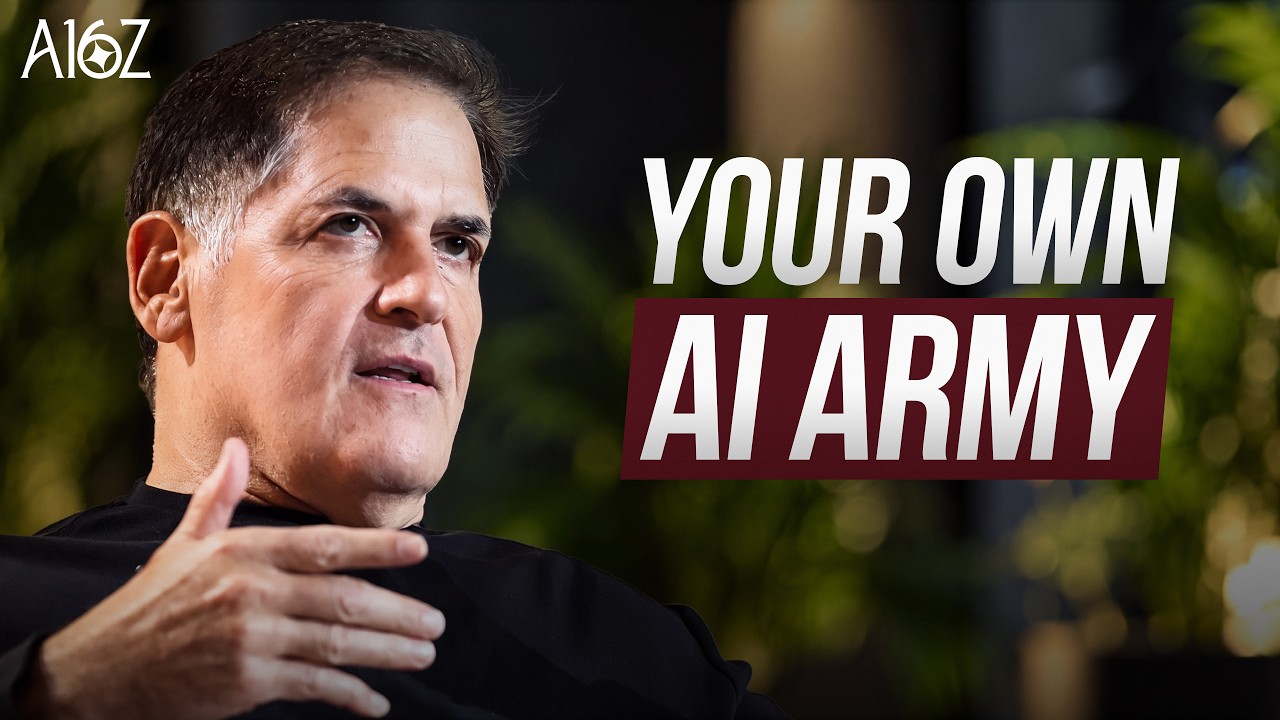
Recorded 28 October 2026 · 60 min
Mark Cuban, founder of Cost Plus Drugs, argues that AI cannot repair healthcare's broken economics once an employer has signed a contract it cannot fully read, but that running those contracts through AI before signing is the fastest lever available. He spoke with two hosts about a market where vertically integrated insurers, led by UnitedHealth with 3,000-plus subsidiaries, control both the payments and the data needed to audit them.
The tension is between Cuban's enthusiasm for AI and his insistence that market structure, not technology, determines outcomes. He also describes a business that has grown from 111 drugs to roughly 4,000 SKUs, and sketches a future of manufacturing pods and personalized medicine, while conceding he has no theory of the case on electronic health records.
Public prices as leverage — ▶ 1:36
Cost Plus Drugs publishes its prices through a public API, so large employers can pull the data daily and demand that carriers beat it. Cuban says the big three and even the big six cite Cost Plus in pricing discussions. He reports that at least one company was told by a big carrier that Cost Plus is part of its network, at cheaper prices, though the company has no agreement with any of the big three. One host argues the entity has forced changes in incumbents that policy never did. The evidence offered is anecdotal.
Drug factories shrunk to pods — ▶ 5:10
Cuban says AI and robotics let Cost Plus shrink a football-field-plus drug plant into 5,000 square feet in Dallas, able to switch drugs every 4 hours and produce a six-month supply per run. The focus is FDA shortage-list generics sold to hospitals and clinics. The same technology now fits in tractor-trailer pods costing about $20 million. The government was the first customer and has ordered a second. Pods can be configured for sterile injectables, daisy-chained, or shipped to research hospitals for N-of-1 therapies. These are Cuban's descriptions, not independently demonstrated.
Direct contracts trade risk for price — ▶ 8:09
Cuban's direct hospital contracts offer two things in exchange for a lower price. The doctor is trusted, with no pre-authorization or denials except for something crazy, and Cost Plus pays the contracted price on time. It also takes responsibility for the patient's out-of-pocket amount, so the hospital stops acting as a subprime lender collecting deductibles. His reasoning is that lower administrative overhead raises the hospital's yield. He also asks to publish each contract at costpluswellness.com as an open template. On the marketplace, he says CEOs agree to buy at cost plus 10 or 12, but purchasing staff resist.
Integration hides the spread — ▶ 11:00
Cuban says UnitedHealth's 3,000-plus subsidiaries and $150 billion in annual intercompany transfers let carriers raise premiums and deductibles while steering patients to companies they own. About 60% of employer-covered people are in self-insured plans, which depend on third-party administrators. Carrier-owned ones are called ASOs. He claims the price an employer pays rarely matches what the hospital charged or was paid, and that employers often cannot get the 835 and 837 claims files to reconcile it, sometimes not even their own claims. Disintermediating the carriers is, in his view, the holy grail.
Why signed contracts are lost — ▶ 14:10
AI cannot fix a market lacking price discovery, Cuban argues, and contract size makes it worse. He cites the City of Dallas PBM contract at 1,335 pages and says no group of humans could catch everything. After an employer signs terms it does not understand, he says, no AI can protect it. Plan-building entrants such as Sidecar face a related problem: carrier subsidiaries are entangled in any network, often invisibly. That is why he backs the Break Up Big Medicine bill, aiming for an open market where entrepreneurs can use AI freely.
Bot wars net out — ▶ 17:13
A host frames payer-provider AI battles as AI faithfully executing a broken fee-for-service system. Cuban agrees these upcoding and downcoding fights are short-term and expects them to net out, since AI is a great equalizer, with each side winning some innings. His long-term bet is structural: carriers grew by acquisition, leaving siloed data across 3,000 subsidiaries, which makes becoming AI-native hard, while hospital revenue cycle management is already good. This is Cuban's opinion rather than an observed outcome, and he says early movers might gain an edge and trigger lawsuits.
Audit the contract first — ▶ 18:39
Cuban's practical advice is to run existing benefits, TPA and PBM contracts through an AI model with one prompt: where are they ripping me off, and what should I do? He says results appear within 30 seconds. He uses agents to draft open-records requests and has LLMs summarize contracts from cities, school districts and unions. He claims that if employers covering 67% of insured people did this, costs would drop like a rock. Public companies he advised were shocked by their overpayments but will not discuss it on earnings calls because they still depend on the carriers.
Pod economics and the FDA bottleneck — ▶ 23:00
Cuban projects selling a couple hundred pods a year within 2 years and a couple thousand within 5, at $20 million each, with good margin. He says pods could make tableted generics in Dallas for less than he pays India-based partners, though he picks the best manufacturer rather than the cheapest. The constraint is regulatory: each generic needs an FDA application costing $365,000 plus fees, so 1,000 would cost $365 million before pod costs. A US-made flag on the website is about 2 years away. These are targets, not results.
AI for patients' bills — ▶ 32:18
Cuban sees the largest non-clinical AI impact on consumers, citing 40% of Americans who cannot afford a $400 emergency bill. He advises asking an AI model, before anything happens, about nonprofit hospitals' financial assistance programs, which all such hospitals must have. They are benchmarked to the federal poverty level and can reach 600%, over $100,000 for some families in some states. His startup idea is to give each nonprofit hospital a copy-and-paste agent prompt that patients can use. He says hospitals are poor at marketing and over-dependent on carriers for patients.
Personalized drugs approach zero cost — ▶ 36:31
Cuban predicts that designing drugs personalized to a person's DNA will approach zero cost as model algorithms improve, starting with over-the-counter drugs. He doesn't know the timeline: 5, 10 or 20 years. He says he urged two frontier labs to bundle it into their $20 or $200 subscriptions, and wants his pods to be the manufacturers. He still expects doctors to be needed, partly because models lag the real world and a human can read a crying child. He adds that patents get remixed easily, so IP owners may charge per access, complicating training data.
Replace insurance with deposits — ▶ 48:36
Cuban's policy list has four elements: public, unredacted contracts for anyone taking taxpayer money; cheaper outside prices that count toward deductibles, which eight states allow at some level; nonprofit hospitals publishing their full general ledger and procurement receipts; and a deposit-based alternative to insurance. Citing his claim that 72% of big carriers' revenue comes from taxpayers, he would have people deposit the ACA silver premium amount, for example $2,100 for a Texas family of five. A bank would lend against it up to a federal stop-loss near $40,000, with a government-guaranteed loan repaid by payroll deduction. Unspent savings would go to the person at 65.
Mark Cuban's argument about healthcare and AI rests on a distinction that is easy to miss: the technology is powerful at the moment a contract is negotiated and nearly useless once it is signed. He is, in his words, a "huge AI fan," and he believes it matters clinically, operationally and, in the short term, most of all contractually. But he also insists that introducing AI into a financial system that is already broken does not repair it. The market lacks price discovery, and faster software on top of broken economics simply accelerates them. If that is right, the employer's signature is the pivotal event, because AI can still change what an employer agrees to but cannot undo what it has agreed to.
The reason timing matters is the structure of the carriers across the table. Cuban points to UnitedHealth, with 3,000-plus subsidiaries and $150 billion in annual intercompany transfers, and says CVS and Cigna are not far behind. In his account, vertical integration lets a carrier raise premiums and deductibles while steering patients toward companies it owns, often without their knowing. Roughly 60% of employer-covered people are in self-insured plans, where a third-party administrator processes medical claims. When the carrier owns that administrator, it is an ASO. Cuban claims the price an employer pays rarely matches what the hospital was charged or paid, and that employers often cannot get the claims files needed to check. He describes this as far worse than PBM spread pricing.
Opacity is compounded by length. Cuban cites the City of Dallas PBM contract at 1,335 pages and says he has not yet seen the ASO contract. No team, he argues, can catch everything in such a document, and once an employer signs terms it does not understand, "they win." His remedy is deliberately low-tech: run existing benefits, TPA and PBM contracts through a model and ask where the employer is being ripped off. He reports that results arrive in 30 seconds. He also uses agents to draft open-records requests and has several LLMs summarize what comes back, and he says he has seen cities, school districts and unions badly overpaying. These are his observations, offered without the underlying contracts.
Cuban is skeptical that AI shifts the balance between payers and providers directly. One host framed the claims-coding fights as AI faithfully executing a broken fee-for-service system. Cuban agrees and calls them short-term skirmishes that will net out, since AI is a great equalizer and each side will win some innings. His longer-term wager is about organizational structure. Carriers grew by acquisition, which leaves siloed data across thousands of subsidiaries, and he thinks that makes becoming AI-native hard. Hospitals, by contrast, already run good revenue cycle management. This is an opinion about how organizations absorb technology, not a measured outcome, and he allows that early movers could gain an edge and provoke lawsuits.
Cost Plus Drugs is his attempt to operate outside that structure. Prices are public, so large employers can pull them through an API and demand that carriers beat them. Cuban says the big carriers cite Cost Plus in pricing talks, and one company reported being told it was in a carrier's network, at cheaper prices, with no agreement in place. The hosts credit this pressure with changing incumbents in ways policy never did, though the evidence is anecdotal. His direct hospital contracts apply the same logic. He trusts the doctor, pays on time and absorbs patient credit risk, and in return asks for a lower price and permission to publish the contract. He calls trust the primary product, supported by a set 15% markup and no marketing spend.
Manufacturing is where Cuban claims technology changes cost structure rather than merely exposing it. AI and robotics, he says, compress a football-field-plus plant into 5,000 square feet and let the line switch drugs every 4 hours. The same approach now fits in $20 million pods, with the government as first customer and a second order placed. He projects a couple hundred pod sales a year within 2 years and a couple thousand within 5, and says pods could make generics for less than his India-based partners charge. But the binding constraint is regulatory. Each generic needs an FDA application costing $365,000 plus fees, so 1,000 would cost $365 million before pods. Technology can shrink the plant but not the approval queue.
On the consumer side, Cuban sees AI's largest non-clinical effect in helping patients decode what they are owed. He says 40% of Americans cannot afford a $400 emergency bill, yet nonprofit hospitals must run financial assistance programs that can reach 600% of the federal poverty level. His advice is to ask a model about those programs before anything happens. Further out, he predicts personalized drug design approaching zero marginal cost, though with no timeline, and he still expects humans in the loop. Models lag reality, doctors can read a crying child, and intellectual property will complicate whether the knowledge is available to train on at all. One host adds that abundant care advice could increase demand for doctors.
Cuban's policy ideas confirm that he does not think technology alone is enough. He would make contracts with anyone taking taxpayer money public, apply cheaper outside prices to deductibles, and require nonprofit hospitals to publish their full general ledgers. His boldest proposal replaces insurance with a deposit account at ACA silver-premium levels, backed by a bank loan, a government guarantee and a federal stop-loss near $40,000. He frames the current system as scale capture: carrier earnings calls talk about technology raising earnings and buybacks, never lower costs for employers. The implication is that technology serves whoever controls the contract, so structure decides who benefits.
That leaves a tension in Cuban's own argument. He says no AI can protect an employer after signing, and that carriers' subsidiaries make entrants' networks hard to build. Yet he also claims that if employers representing 67% of insured people ran their contracts through AI first, the carriers' system would collapse. Both can be true only if employers can credibly walk away. The public companies he describes cannot: they will not mention their overpayments because they still do business with the same carriers. Cuban's own answer is education and a dedicated healthcare CEO or CFO who manages contracts. Whether that is enough without the legislative fixes he also wants remains untested.
The open question. Can employer-side AI review produce lower prices without credible alternative networks? Cuban says carriers' subsidiaries touch nearly every deal, that entrants building wraparound networks struggle for that reason, and that public companies he advised would not disclose their overpayments for fear of losing carrier relationships. His claim that audited contracts would make the system collapse depends on employers being willing and able to walk away. The conversation offers no evidence that they are.
Watch the full video at https://www.youtube.com/watch?v=5UWDUD6qaM4.
Comments ()