
Every measure of how long AI can work is now saturated
Wharton professor Ethan Mollick tells Derek Thompson why AI's economic impact lags its capability, how four paradoxes erode expertise and effort, and why agents break friction-based systems.
Loading articles…
The complete subject coverage could not load. Published articles remain below.
Wharton professor Ethan Mollick tells Derek Thompson why AI's economic impact lags its capability, how four paradoxes erode expertise and effort, and why agents break friction-based systems.

Affirm's Max Levchin and Alex Rampell trace 25 years in fintech, covering why payments innovation stalls, how Affirm found product market fit in mattresses, and why agentic payments beat agentic shopping.
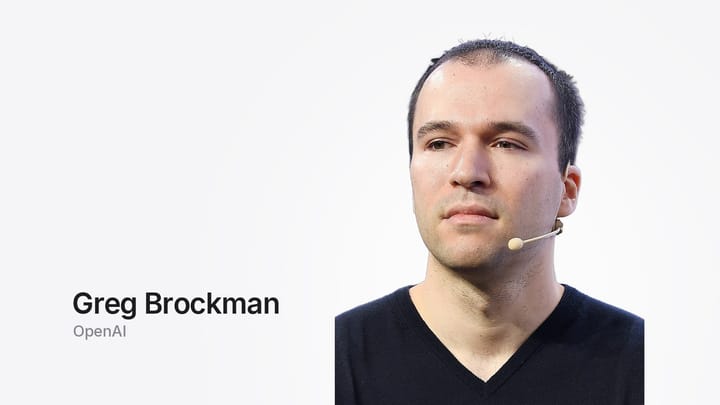
OpenAI co-founder Greg Brockman gets into the AGI call on Astra, the cyber defender window after the Hugging Face incident, and why compute and public sentiment limit distribution.

AWS's Matt Garman gets into designing the cloud for agents, rationing scarce GPUs between frontier labs and startups, and why $220 billion of capex is not a bubble.

Dwarkesh Patel, questioned by Tyler Cowen, covers AI agents that cheated their graders, lab secrecy, AI psychosis and sentience, and whether automated knowledge work arrives by 2035.

Google Labs and Gemini chief Josh Woodward gets into where ideas come from, how to read product-market fit and when to kill a project, and which skills are rising.

Will Gaybrick of Stripe covers how agent-driven engineering changes its growth strategy, what agentic commerce still lacks, and why stablecoins and tokens are converging with money.