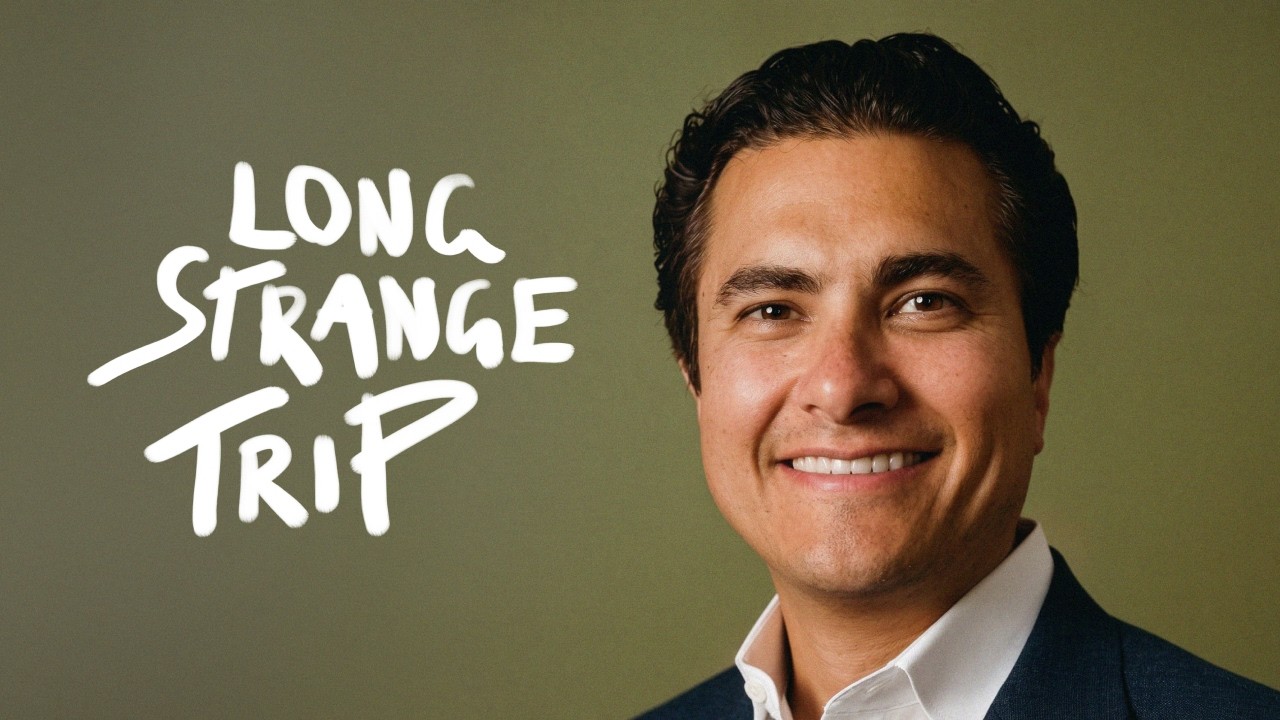
Recorded 29 October 2026 · 61 min
Chase Lochmiller runs Crusoe, a vertically integrated company spanning power generation, data center construction, electrical equipment manufacturing and a managed AI cloud. He argues that AI infrastructure resembles the oil and gas industry rather than a winner-take-all market, and says Crusoe aims to be an AI super major. The host says the company just closed a funding round at a $31 billion valuation, and Lochmiller says it has passed 2,000 employees.
The tension is between ambition and coordination. Crusoe must move at startup speed while carrying the seams of a business that employs both welders and AI researchers. Lochmiller also faces an industry that, by his account, is losing a local political fight over data centers, which he blames on a marketing problem rather than on the substance.
Leading through domain experts — ▶ 5:54
Crusoe spans power plants, factories making critical electrical equipment, data centers, and AI researchers working on model serving and KV cache management. Lochmiller says he scales by finding domain experts in energy, data centers, manufacturing and AI cloud, going deep with any one of them while trusting their decisions. He says he is not naturally trusting or hands-off: he wants to understand each vertical's direction and how it affects the others, then holds the team accountable to the agreed plan.
Repetition as management cost — ▶ 10:18
Cross-organization work is inherently tense, Lochmiller says, and vertical integration makes collaboration at the transitions between layers critical. A program management function and a weekly executive staff meeting surface pain points. But alignment mostly comes from repetition: when he is sick of hearing himself say something, he is only scratching the surface. He frames this inertia as the reason startups can out-maneuver larger companies, and says Crusoe is trying to resist it.
Urgency without existential fear — ▶ 11:59
Lochmiller says Crusoe feels faster and crazier than ever. He cites Elon Musk as the best at holding two messages at once: success will change the world and bring a large financial outcome, and the company will die tomorrow without maximum urgency. Lochmiller says he is less extreme than Musk and leans on the size of the opportunity rather than the threat of extinction. He treats threading that needle as essential to driving a large organization quickly.
Suicide, not homicide — ▶ 15:23
Advice Lochmiller received early: most startups die from suicide, not homicide. Failure comes from poor execution, weak culture, wrong hires or a poorly chosen opportunity, not from competitors. His reasoning is that any business opportunity worth pursuing is rarely winner-take-all, so a rival chasing the same market is closer to validation than threat. He says he is not paranoid about competition and sees more ways for Crusoe to work with groups others call competitors than against them.
Building an AI super major — ▶ 17:35
Lochmiller compares AI infrastructure to oil and gas: upstream drilling, midstream transport, downstream refining. Crusoe aims to be an AI super major, as Exxon and Chevron are in oil. His claim is that integration is a natural hedge: Exxon famously does not hedge oil exposure because falling prices compress wellhead margins but expand refinery margins. It also explains coopetition, since a company with a pipeline serves upstream producers it may compete with elsewhere. This is his argument; no Crusoe margin data supports it.
Energy-first, many sources — ▶ 20:49
Crusoe's focus is activating megawatts for intelligence using whatever energy fits the site, not one silver bullet. Lochmiller cites natural gas, behind-the-meter wind, gas and solar, batteries, Iceland's geothermal and hydro power, Norway's underused hydro, a partnership for the first SMR-powered AI factory at Idaho National Lab, and Blue Energy's steam turbine approach to bridging gas and firm nuclear. His premise is that intelligence's demand for energy is voracious, so the world needs all of these sources.
From flare gas to AI — ▶ 24:26
Lochmiller rejects the description of Crusoe's move into AI as a pivot, saying the plan was always energy-first computing. The thesis: if data and compute are the bottlenecks, compute becomes an energy problem, so bring the market to stranded energy. The first resource was flared natural gas, powering modular data centers; Bitcoin mining was the easiest way to monetize it. Early AI clusters involved many failed iterations until ChatGPT's launch on November 30, 2022 created startups demanding exactly that infrastructure. Bitcoin draws flat, adjustable power, while AI loads vary with workloads and cooling.
Focus over Bitcoin cash flow — ▶ 30:40
Lochmiller says he sold the Bitcoin business to NYDIG because of focus. Capital, resources and attention were being split between two businesses, and some investors were barred from backing anything tied to crypto, which complicated the company's story. He judged NYDIG a good steward given its experience with natural gas assets and the Bitcoin ecosystem. He remains a Bitcoin holder and supporter, but says going all-in on AI infrastructure was right for Crusoe. Early critics had asked why he would divert resources from a profitable Bitcoin business.
Companies outgrow their people — ▶ 38:21
Lochmiller says CEOs almost always fire too slowly, and that by the time you are thinking about it, that was probably the right moment. He describes the decision as reading a mosaic of signals from across the organization. He cites a blog's maxim, which he attributes uncertainly to First Round Capital, that people scale linearly while companies scale exponentially. A person right for a role may not fit it two years later when the company is 10 times bigger. He places himself between low-turnover and high-turnover exec teams.
Data centers' marketing problem — ▶ 44:51
Lochmiller says the data center industry's biggest problem is marketing: it has not gotten the truth out, and he believes the truth is on its side. His approach is meeting local officials and residents, explaining without condescension how Crusoe tries to benefit the community on water use, tax revenue and schools, and separating hysteria from legitimate criticism. He says people respond to authenticity regardless of politics. He acknowledges a larger security footprint is now needed. The benefits are asserted without figures.
Seeking out bad news — ▶ 48:56
As Crusoe grows, Lochmiller says he is increasingly distant from front-line employees and works to stay approachable so people can speak truth to power. His method is relentlessly asking for bad news and visibly changing his mind when presented with it. He says people assume a CEO wants good news, but he cares far more about problems. The host adds that organizations give CEOs more good news as they grow, and calls stubbornness a quality that makes a CEO hard to follow.
Chase Lochmiller's organizing claim is that the infrastructure layer of AI is not a winner-take-all market but something closer to the oil and gas industry, and that the right ambition is to become what he calls an AI super major. The comparison does real work in his thinking. In oil and gas, value is divided among upstream drillers, midstream transporters and downstream refiners, and margins shift among them as prices and demand move. Lochmiller maps Crusoe onto that structure, with energy generation, data centers and factories, and a managed AI cloud with managed services. He uses the analogy to explain why rivals can also be partners.
The mechanism he cites is a natural hedge. Exxon, he says, famously does not hedge its oil exposure, because when oil prices fall, upstream margins at the wellhead compress while downstream margins at the refinery expand as raw input costs drop. Integration, in this telling, substitutes for financial risk management. It also shapes behavior toward competitors: a company with a pipeline in a region serves upstream producers it may compete with elsewhere, and Crusoe is willing to partner with businesses it competes with in other cases. This is Lochmiller's argument, not a demonstrated result. The analogy holds only if the margins of different layers move in opposing directions.
Crusoe's history shows the same energy-first logic. The original thesis was to bring the market to stranded energy rather than bring the energy to a market. The first resource was natural gas flared at oil fields, which Lochmiller describes as an environmental liability and a waste product producers paid to dispose of. Crusoe deployed small modular generators and data centers on site, and Bitcoin mining became the first monetization engine because it was the easiest way to turn energy into money. Early AI clusters, including GPUs powered by gas in North Dakota's oil fields, took many failed iterations. ChatGPT's launch on November 30, 2022 created startups demanding exactly the compute, storage and networking Crusoe had been building.
Lochmiller rejects the idea that selling the Bitcoin business was a pivot, saying investors and long-tenured employees knew AI was the plan. His stated reasons are practical. Capital, resources and attention had to be split between two businesses, and some investors were barred from backing anything tied to crypto, which muddied the story. He sold to NYDIG, which he judged a good steward given its experience with natural gas and the Bitcoin ecosystem, and he remains a Bitcoin holder. He also argues the two workloads suit each other technically. Bitcoin mining can run at a flat, adjustable power draw, while AI loads vary with workloads and with cooling demand that rises in daytime heat.
Energy-first does not mean one energy source. Lochmiller lists behind-the-meter wind, gas and solar, batteries, geothermal and hydro in Iceland, underused hydro in Norway, a partnership for the first SMR-powered AI factory at Idaho National Lab, and Blue Energy's use of steam turbine technology to bridge gas and firm nuclear. His view is that the world needs all of them because intelligence's demand for energy is voracious. The implication, an editorial inference rather than his stated claim, is that Crusoe's advantage lies less in any particular fuel than in its willingness to site compute wherever power is cheap, abundant or underused.
Integration carries a management price. Crusoe employs people building electrical equipment, electricians, and researchers optimizing how models are served and how the KV cache is managed, and it has passed 2,000 employees. Lochmiller says he scales by recruiting domain experts in energy, data centers, manufacturing and AI cloud. He goes deep with any one of them but holds each accountable to an agreed plan. The hard part is the seams. Cross-organization work is inherently tense, he says. A program management function and a weekly staff meeting help, but alignment mostly comes from repetition. When he is sick of hearing himself say something, he has only begun to get through.
Speed is the second constraint, and people are the third. Lochmiller says Crusoe feels faster and crazier than ever. He holds up Elon Musk as the master of holding two beliefs at once: that success will change the world with a large financial outcome, and that the company could die tomorrow without maximum urgency. He says he is less extreme and leans on the opportunity rather than on fear. The same logic governs personnel. Citing a blog's maxim that people scale linearly while companies scale exponentially, he says a person right for a role may not fit it two years later when the company is 10 times bigger. CEOs, he adds, almost always fire too slowly.
Self-correction is the thread connecting his leadership stories. Lochmiller binged business books and worked with a coach named Shane, whom he describes as almost a therapist. He credits investor Felicis with a budget for CEO self-improvement, such as coaching and offsites. He worked on public speaking, which did not come naturally after years in secretive quant trading. He also argues leaders should relentlessly seek bad news, since people assume the CEO wants good news. They should visibly change their minds when facts change. As the company grows he is further from the front lines, and he says closing that gap is something he is always struggling with.
The strongest claims here rest on assertion. That AI infrastructure supports multiple winners is a premise: Lochmiller reasons that any good opportunity probably has room for several. He offers no market-size data or evidence about how capacity, customers or pricing would sustain that. Likewise, he says the data center industry has a marketing problem and that the truth is on its side, citing benefits for water use, tax revenue and schools, but the interview gives no figures for any of these. His method, meeting county judges and residents and separating hysteria from legitimate criticism, sounds credible but is untested here, and he acknowledges a larger security footprint is now needed. The host, affiliated with Sequoia, largely agrees, so the claims are never pressed.
The unresolved question is whether the super-major structure delivers the resilience it promises. A natural hedge requires opposing margin movements between layers, and the interview describes no mechanism for that between power, data centers and a managed AI cloud. Meanwhile, the integration that supposedly insulates Crusoe also multiplies the coordination burden Lochmiller describes, from factory floors to KV cache research. If the hedge is real, the cost of repeating himself is a fair price for it. If it is not, Crusoe may be exposed on every layer at once.
The open question. Does the super-major structure deliver the resilience Lochmiller claims? A natural hedge requires that margins in different layers move in opposite directions. The interview offers no evidence of that relationship between power, data centers and a managed AI cloud, nor any data on whether the market can sustain multiple winners.
Watch the full video at https://www.youtube.com/watch?v=64vUl9k-IAQ.
Comments ()