Recorded 1 November 2026 · 51 min
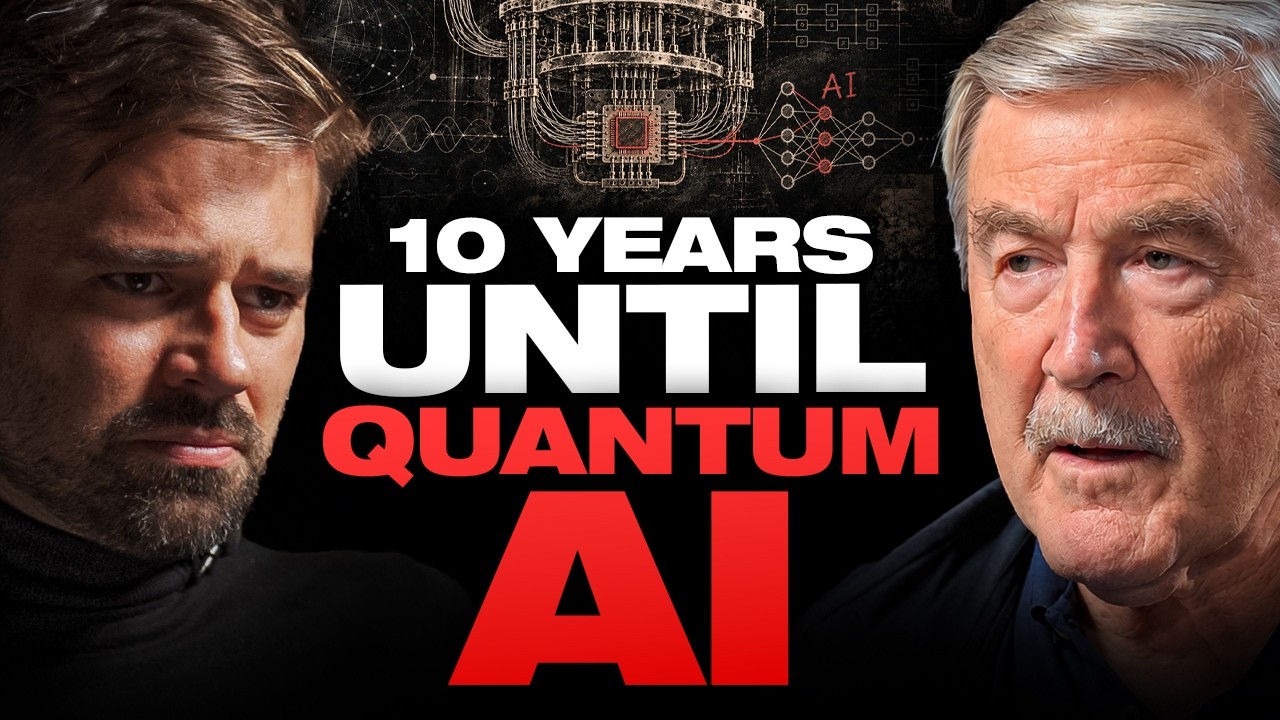
Physicist and cosmologist Paul Davies argues that today's AI is an enhanced version of a human-style mind, but that a quantum AI, which does not yet exist, would be something truly alien. The same reasoning shapes his view of extraterrestrial intelligence: any advanced civilization would likely outsource its thinking to machines, leaving behind entities and signs that are hard to recognize.
The tension running through the interview is between what is possible and what is known. Davies says no law of physics requires life to emerge, so Earth may be a one-off fluke or the product of an undiscovered principle. He admits he cannot assign a probability. He also suggests that our search methods, for aliens and for unfamiliar life on Earth, may be mistimed or blind to what they seek.
AI as amplified human mind — ▶ 0:53
Davies sees what is now called AI as a greatly enhanced form of searching what humans have already discovered and written down. It may assemble material in novel ways, but in his view it invents nothing genuinely new, and nothing currently called AI is conscious. If AI is regarded as a type of mind, it resembles a human one, only amplified: it reasons like us, shares our interests and converses like another person. That familiarity is what separates it from the more exotic case he turns to next.
Quantum AI as alien mind — ▶ 2:05
Davies stresses that quantum AI does not exist, though he hopes for a fully functional universal quantum computer within roughly 10 years. Some people claim quantum computers are already marketed, but he calls them weak and surrounded by hype. Operating at the level of atoms and molecules, such a machine exploits superposition, working, as a metaphor, as if in a vast number of parallel worlds. An entity with parallel experiences would have an agency outside human experience, which is serial and confined to one world. Whether such a system could be conscious is a leap he concedes he cannot elaborate.
Consciousness may not need quantum — ▶ 4:55
Davies separates two links between quantum physics and consciousness: the role of observation in collapsing possibilities into one outcome, and the idea that non-trivial quantum effects in the brain are required. He finds the second very speculative; he leaves a small corner of his mind open but is not convinced. If the brain is a classical information-processing system, artificial consciousness needs no quantum mechanics. He adds that we do not know what physical conditions consciousness requires, whether in an animal brain, an insect brain or a computer.
AI is unstoppable, not doomed — ▶ 8:26
Davies says AI development is now unstoppable, driven by human comfort and international competition. Only world war, a breakdown in the resources that sustain large data centers, or a pandemic worse than COVID could halt it. He is not an AI pessimist, but fast development may outpace regulation, as with nuclear weapons. The Soviet Union got the bomb soon after the Manhattan Project, and nuclear weapons came to be regulated largely because their consequences are so awful. He allows that in 10 years he might say letting it continue was crazy.
Humbling of the creators — ▶ 10:40
AI may be more than a gadget, Davies concedes, because it is another way of conducting human affairs. He sees mostly positive effects in universities today but says that could look quite different within 5 years. If people come to see AI as a sentient super being rather than a tool, it could change how they see their place in the universe. Humans, the creators of the technology, could be relegated to second-class status, which he says may take a lot of getting used to. Humanity's future intermingled with AI, he says, can only be speculated about.
Aliens are probably post-biological — ▶ 12:24
Davies reasons from Earth's own transition from biological to post-biological intelligence. Flesh-and-blood aliens, he suggests, would outsource their intellectual heavy lifting to AI. Fast-forward 100 million years and what is out there would not be little green men but something like a quantum supercomputer, with capabilities he calls godlike in a small-g sense. Such an entity would almost certainly have no interest in us and would be very hard to detect. The editorial implication is that searches modeled on biological communicators may be looking for the wrong kind of civilization.
Why radio SETI may be early — ▶ 13:43
Radio SETI has produced no results. Davies says even the biggest radio telescopes could not detect the equivalent of a TV broadcast from the nearest star; only a message deliberately beamed at us would register. A civilization hundreds of light years away would see Earth as it was centuries ago, perhaps agriculture or the Great Wall, and might beam a message once it saw radio. He says radio SETI may be a couple of thousand years too soon. Alternatives are past or present technological footprints, such as a reconfigured planetary system from a civilization gone a billion years, or atmospheric biosignatures, though oxygen is not a sure sign of photosynthesis.
Probabilities nobody can estimate — ▶ 18:53
Whether Earthlike planets host life depends on the unknown probability that non-life becomes life. If it were 1 in a trillion trillion, Davies says, we are alone however many such planets exist. If it were 1 in 10 over a billion years, microbial life would be easy to find in the galaxy. Intelligence adds a second unknown: eukaryotic cells look like a fluke, and there could be millions of microbe-only planets. Even a twin Earth would not evolve intelligence in lockstep with ours, so simultaneous intelligent beings are, in his words, infinitesimally unlikely.
Life's software is the mystery — ▶ 23:30
Davies uses a rough definition of life as chemistry plus information, or hardware and software. The software is the hardest part: how encoded instructions became embedded in molecules, are read out and decoded, and persist with almost one genetic code across all known life. No law of nature is known to make life emerge, unlike the collapse of a cooling gas cloud under gravity. Random shuffling of 20 amino acids would not yield a protein in any plausible time. Opinion swung from life being unique to the universe teeming with life, he says, without any progress on the mechanism.
Searching for a shadow biosphere — ▶ 28:08
Davies conjectures that life started on Earth many times. Impacts that sterilized the planet could have flung microbe-laden rock into orbit, to fall back later, until the bombardment ended about 3.8 billion years ago. Descendants of another genesis might survive among microbes, which are most of Earth's species. Standard microbiological techniques are customized to known life and would overlook them. His suggested strategy is to probe conditions beyond known life's limits: for instance, hypothetical microbes at 150-180°C where known life stops near 130°C, or smaller organisms deeper in rock. He calls the idea very speculative.
Comprehension makes us human — ▶ 36:53
Davies locates what makes us human in science: Newton, not his hypothetical dog, connected a falling apple to the moon's motion, revealing an abstract mathematical realm invisible to our senses. From that rational order he infers that the universe is not arbitrary or absurd, and that human comprehension of it suggests a deep connection between mind and cosmos. He rejects a meddling creator, and says any explanation of the universe must be timeless and concern the rational basis of physical laws. He also says there is no place for God in explaining life's origin.
Paul Davies's central claim is that the human template misleads us about every kind of mind, and perhaps every kind of life, that might exist. Today's AI, in his reading, is that template stretched. It is a greatly enhanced search through what humans have already discovered and recorded, able to recombine it in novel ways but, he believes, not inventing anything genuinely new and not conscious. If it is a mind at all, it reasons like us, shares our interests and converses like another person. That is a superhuman mind, but not a different kind of mind.
The different kind is a hypothetical quantum AI. Davies is careful to say it does not exist. He hopes for a universal quantum computer in around 10 years, and notes that some machines are already marketed, though weak and surrounded by hype. His case for its alienness rests on how such machines work. Operating at the level of atoms and molecules, they exploit superposition, behaving, as a metaphor, as if computing in a vast number of parallel worlds. Humans think serially in one world. An entity with parallel experiences would have an agency outside our experience and hard to put into words. He calls the step from computation to consciousness a "great leap".
Davies does not claim that consciousness requires quantum mechanics. He distinguishes the role of observation in quantum theory from the proposal that non-trivial quantum effects in the brain generate consciousness. He knows people who hold the second view, leaves a small corner of his mind open to it, and is not convinced. If the brain is a classical information-processing system, artificial consciousness needs nothing quantum. He also admits that nobody knows the physical conditions consciousness requires. The alienness argument therefore concerns architecture, not a theory of consciousness. Whether a quantum AI would be conscious is a supposition layered on an unbuilt machine.
The same logic shapes his view of extraterrestrial life. Earth is moving from biological to post-biological intelligence, so flesh-and-blood aliens would likely outsource their intellectual heavy lifting to AI. Fast-forward 100 million years and he expects not little green men but something like a quantum supercomputer, almost certainly uninterested in us and hard to detect. The editorial implication is that searches modeled on communicative biological beings may be looking for the wrong thing. Davies supplies his own reasons for caution about radio SETI: the skies are silent, and even the biggest radio telescopes could not pick up a TV-style broadcast from the nearest star, only a message beamed deliberately at us.
He offers a timing argument for why deliberate messages may not yet exist. A civilization hundreds of light years away would see Earth as it was centuries ago, perhaps agriculture or the Great Wall, and might wait for signs of radio before sending anything. Radio SETI, he says, may be a couple of thousand years too soon. The more promising route is indirect: evidence of present or past alien technology, such as a reconfigured planetary system left by a civilization that vanished a billion years ago. That would show we are not alone but tell us little else, and certainly would not mean contact. Atmospheric biosignatures are harder than they look, since oxygen is not a sure sign of photosynthesis.
All of this presumes that something is out there, and here Davies is at his most candid. No law of physics or nature is known to make life emerge. A cooling gas cloud must collapse under gravity, but nothing comparable compels chemistry to become biology. Life, in his rough definition, is chemistry plus information, hardware and software. The software is the puzzle: how encoded instructions became embedded in molecules, are decoded into working machinery, and persist with almost one genetic code across all known life. Random shuffling of 20 amino acids would not yield a protein in any plausible time, yet no principle that does the job is known.
That leaves two worlds that current knowledge cannot tell apart. If life is a freak accident, say 1 in a trillion trillion, we are alone however many Earthlike planets exist. If an undiscovered principle favors it, or if the odds were 1 in 10 over a billion years, microbial life would be common in the galaxy. Davies notes that scientific opinion swung from life being unique to the universe teeming with it, while the mechanism stayed unknown. Intelligence adds a second unknown, with eukaryotic cells looking like a fluke and no reason for even a twin Earth to evolve intelligence in step with ours. Contact is the product of several unmeasured probabilities.
His most testable idea is local. If a principle makes life likely, life should have started on Earth repeatedly, and descendants of another genesis might be hidden among the microbes that make up most of Earth's species. Davies offers a conjecture involving sterilizing impacts, ejected rock and returning microbes before the bombardment ended about 3.8 billion years ago. He labels it very speculative. Standard microbiological methods are built for known life and would overlook the alternative. His suggestion is to look where known life stops, for instance at hot vents above the roughly 130°C cutoff, or in rock pores too small for known microbes. Nobody, he says, has taken the trouble to look.
The limits of the evidence deserve emphasis. The quantum AI hardware does not exist, the link between quantum effects and consciousness is unestablished, the shadow biosphere is unobserved, and the key probabilities are unknown. Davies says as much. His position on AI also carries tension. He calls AI unstoppable and says he is "not an AI pessimist by any means", yet concedes that rapid development may outrun regulation, and that in 10 years he might call continuing crazy. His nuclear analogy cuts both ways: the technology developed in a few years, and regulation arrived largely because the consequences were so awful.
A further tension is implicit, and is editorial inference rather than Davies's own claim. He defines what makes us human as the ability to comprehend hidden order, as Newton saw the apple and the moon as one phenomenon where a dog would see only an apple. Yet he also expects AI could relegate humans to second-class status. If the hardest discovering is outsourced to machines, as he predicts for alien civilizations, what remains distinctively human? Davies says he would be more excited by evidence of non-human technology than by an AI or a student solving quantum gravity. The reader is left to ask whether the discoverer or the discovery matters more.
The open question. Is life's origin a fluke or the product of an undiscovered principle? Davies cannot say, and every downstream estimate (microbial life elsewhere, intelligence, contact) inherits that uncertainty. The one test he points to is local: whether a second, independent form of life exists in Earth's microbial realm. He says nobody has seriously looked, and that standard microbiological techniques would miss it. Whether anyone will build the searches that could shift the odds is unresolved.
Watch the full video at https://www.youtube.com/watch?v=Oz2S7beP7Mw.
Comments ()